parusa
parúsa with stress marks
punishment; penalty
Usage Note
Parusa is punishment of any kind, from a parent grounding a child to a court sentence; parusang kamatayan is the death penalty. Parusahan means "to punish". A money fine is specifically multa.
Examples
" Mabigat ang parusa niya. "
Natural Translation
His punishment is heavy.
Literal Translation
Heavy the punishment his.
" May parusa ang sinumang lumabag sa batas. "
Natural Translation
Anyone who breaks the law faces a penalty.
Literal Translation
Has penalty the whoever-that violated the law.
" Bilang parusa sa pag-uwi nang gabi, hindi siya pinayagang lumabas ng bahay sa loob ng isang linggo. "
Natural Translation
As punishment for coming home late at night, he wasn't allowed to leave the house for a week.
Literal Translation
As punishment for coming-home at night, not he allowed-to go-out of house at inside of one-that week.
Take Tagalog with you
The full course, a 12,500-word dictionary, and flashcards that make every word stick — free to start on iOS and Android.


Tagalog builds thousands of words from a few hundred roots.
How Tagalog words workRelated Words
Explore Tagalog by topic
Free guides on grammar, vocabulary, and culture to take you past single-word lookups.
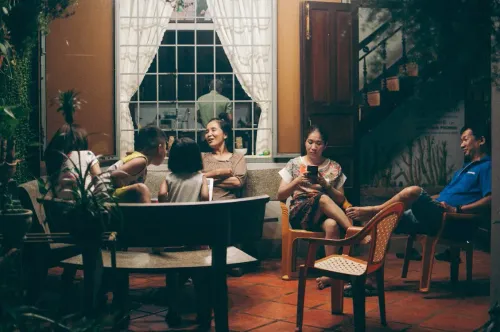
Filipino Family Words and Honorifics: Ate, Kuya & Tita
Filipino family words like ate, kuya, tita, tito, lolo, and lola go far beyond family — learn how Filipinos use them with strangers, plus mano po etiquette.
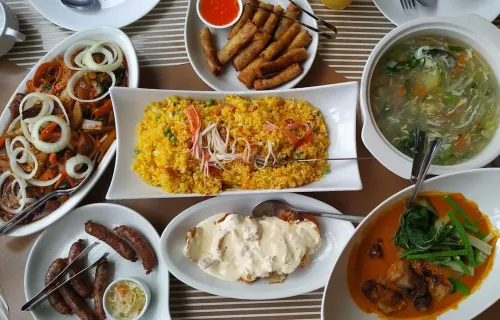
Filipino Food: 12 Essential Dishes (With Tagalog Names)
Filipino food, from adobo to halo-halo: learn the Tagalog names, pronunciations, and ingredients behind 12 dishes you'll want to try on your first trip.

Mano Po and Filipino Etiquette: A Visitor's Guide
Mano po presses an elder's hand to your forehead as a blessing. Learn who to mano, how to lip-point, and the etiquette that wins over a Filipino family.

Ang, Ng, Sa: The 3 Tagalog Case Markers Explained
Ang, ng, sa are the three Tagalog case markers every noun takes. Learn what each does, the personal forms si/ni/kay, plurals with mga, and clear examples.