rali
rálì with stress marks
rally; large assembly
Usage Note
Rali is borrowed from English 'rally' but in Philippine culture refers almost exclusively to political demonstrations and mass protests rather than sporting or commercial events. The Philippines has a strong tradition of street demonstrations, and the word carries significant political weight.
Examples
" May rali sa kalsada bukas. "
Natural Translation
There is a rally on the street tomorrow.
Literal Translation
Have rally on street tomorrow.
" Dumalo ang libu-libong tao sa rali sa EDSA. "
Natural Translation
Thousands of people attended the rally at EDSA.
Literal Translation
Attended the thousands-of-thousands people at-the rally at EDSA.
" Maraming manggagawa ang sumama sa rali upang ipaglaban ang nararapat nilang sahod at karapatan. "
Natural Translation
Many workers joined the rally to fight for their rightful wages and rights.
Literal Translation
Many workers the joined in-the rally so-that be-fought-for the deserved their wage and right.
Take Tagalog with you
The full course, a 12,500-word dictionary, and flashcards that make every word stick — free to start on iOS and Android.




Tagalog builds thousands of words from a few hundred roots.
How Tagalog words workRelated Words
- AWOL absence without leave
- Amboy short for American boy
- Ati ethnolinguistic group in Panay
- Balbalan ethnolinguistic group (Kalinga)
- Hiligaynon ethnolinguistic group/language
- Ilokana female native of the Ilocos region; Ilokana woman
- Ilokano Ethnolinguistic group in Ilocos
- Ilonggo Language/People of Western Visayas
Explore Tagalog by topic
Free guides on grammar, vocabulary, and culture to take you past single-word lookups.

Tagalog Time Expressions: Past, Present & Future Guide
Tagalog has no tenses — it uses aspect. Learn time words, days of the week, clock time, and the aspect system, with vocabulary tables and cultural notes.

Mano Po and Filipino Etiquette: A Visitor's Guide
Mano po presses an elder's hand to your forehead as a blessing. Learn who to mano, how to lip-point, and the etiquette that wins over a Filipino family.
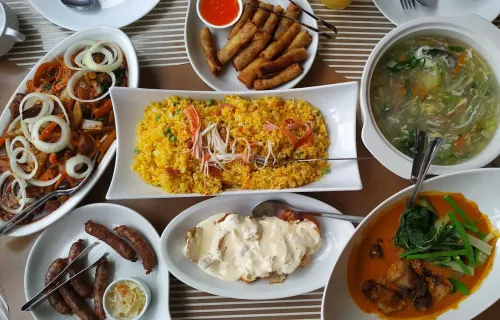
Filipino Food: 12 Essential Dishes (With Tagalog Names)
Filipino food, from adobo to halo-halo: learn the Tagalog names, pronunciations, and ingredients behind 12 dishes you'll want to try on your first trip.

Po and Opo in Tagalog: Where to Put Them Right
Po and opo confuse learners — but placement follows one rule. Where po goes in a sentence, why it's opo not 'oo po', and the pronoun shift to learn.