sanga-sanga
interconnected or branching out
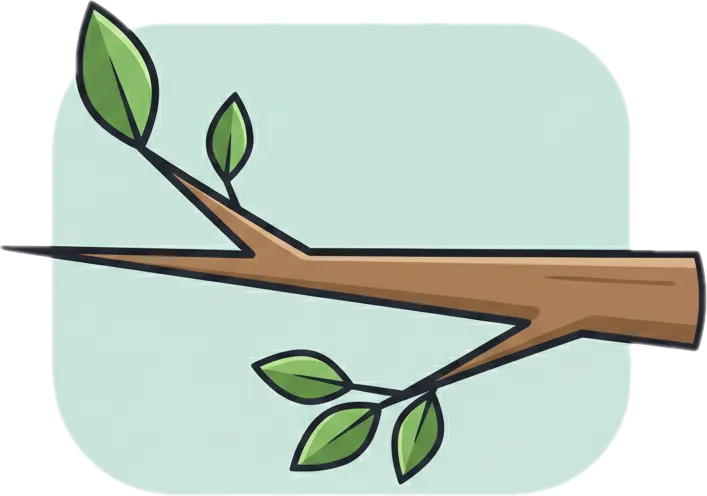
From root: sanga
Usage Note
Sanga-sanga is used to describe things that fork or split into multiple directions, like roads or narratives. It often implies complexity due to many intersections.
Examples
" Sanga-sanga ang puno. "
Natural Translation
The tree is branching out.
Literal Translation
Branching-out the tree.
" Sanga-sanga ang daan dito. "
Natural Translation
The path here is interconnected.
Literal Translation
Interconnected the path here.
" Sanga-sanga ang mga daan sa lumang bayan, kaya madaling maligaw ang sinumang hindi pamilyar sa lugar. "
Natural Translation
The roads in the old town branch out in many directions, so anyone unfamiliar with the place can easily get lost.
Literal Translation
Branching-out the roads in old town, so easily get-lost whoever not familiar in the place.
Take Tagalog with you
The full course, a 12,500-word dictionary, and flashcards that make every word stick — free to start on iOS and Android.




Tagalog builds thousands of words from a few hundred roots.
How Tagalog words workWord family
sanga has 4 related forms built from the same root.
Related Words
Explore Tagalog by topic
Free guides on grammar, vocabulary, and culture to take you past single-word lookups.
Filipino Food: 12 Essential Dishes (With Tagalog Names)
Filipino food, from adobo to halo-halo: learn the Tagalog names, pronunciations, and ingredients behind 12 dishes you'll want to try on your first trip.

Mano Po and Filipino Etiquette: A Visitor's Guide
Mano po presses an elder's hand to your forehead as a blessing. Learn who to mano, how to lip-point, and the etiquette that wins over a Filipino family.

How Long Does It Take to Learn Tagalog?
Survival Tagalog takes ~3-4 weeks and comfortable conversation 6-12 months. FSI's 1,100 hours is the professional bar, not the talking-to-family bar.
Philippines Geography for Learners: Islands & Language
Philippines geography for Tagalog learners: 7,641 islands, three island groups, and the Southern Luzon heartland where the Tagalog language was born.