sastre
sástre with stress marks
tailor
Usage Note
Sastre, from the Spanish 'sastre', is the traditional Tagalog word for a tailor — someone who cuts and sews custom-fitted clothing. Before ready-to-wear fashion became widespread, sastre shops were central to every Philippine town. Many Filipinos still commission barong Tagalog and formal wear from a sastre for weddings and special occasions.
Examples
" Mahusay na sastre si Lolo. "
Natural Translation
Grandpa is a skilled tailor.
Literal Translation
Skilled link tailor the Grandpa.
" Pumunta siya sa sastre. "
Natural Translation
He/She went to the tailor.
Literal Translation
Went he/she to tailor.
" Bago ang kasal, nagpatahi muna kami ng barong Tagalog sa sastre na pinagkakatiwalaan ng aming pamilya. "
Natural Translation
Before the wedding, we first had a barong Tagalog made by the tailor our family trusts.
Literal Translation
Before the wedding, had-sewn first we of barong Tagalog at tailor that trusted by our family.
Take Tagalog with you
The full course, a 12,500-word dictionary, and flashcards that make every word stick — free to start on iOS and Android.




Tagalog builds thousands of words from a few hundred roots.
How Tagalog words workRelated Words
Explore Tagalog by topic
Free guides on grammar, vocabulary, and culture to take you past single-word lookups.

Tagalog Time Expressions: Past, Present & Future Guide
Tagalog has no tenses — it uses aspect. Learn time words, days of the week, clock time, and the aspect system, with vocabulary tables and cultural notes.
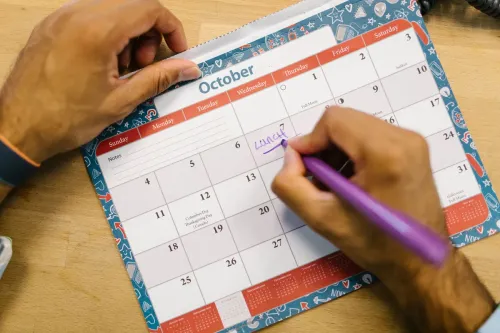
Days of the Week and Months in Tagalog
The days of the week and months in Tagalog are Spanish loanwords. Learn all 7 days and 12 months with pronunciation, plus how to say dates and 'every Monday.'

Na vs -ng in Tagalog: The Linker Rule Made Simple
When do you use na vs -ng in Tagalog? One simple rule, with clear examples, memory tips, and common mistakes explained for English-speaking beginners.

How Long Does It Take to Learn Tagalog?
Survival Tagalog takes ~3-4 weeks and comfortable conversation 6-12 months. FSI's 1,100 hours is the professional bar, not the talking-to-family bar.