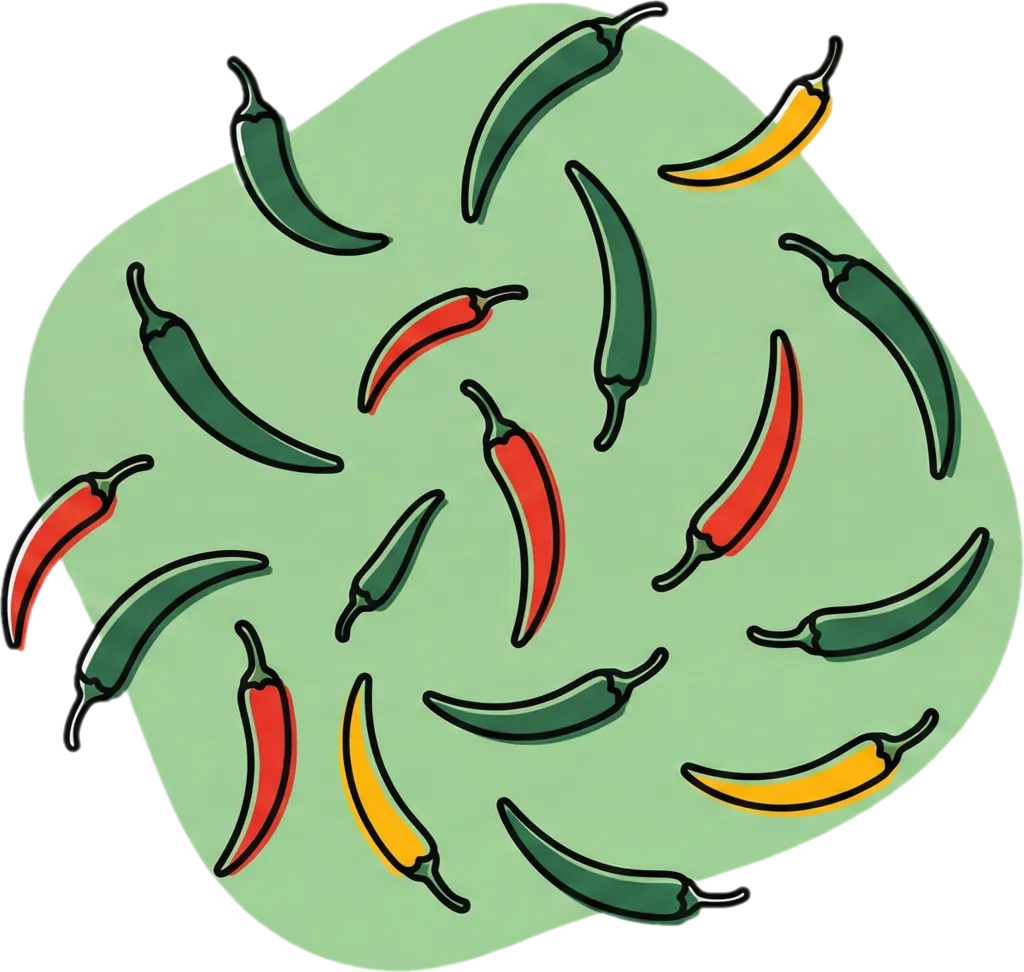
From root: sili
Conjugations
Past (Completed)
nagsili
nag-si-LI
added chili
Present (Incomplete)
nagsisili
nag-si-si-LI
adding chili
Future (Contemplated)
magsisili
mag-si-si-LI
will add chili
Usage Note
Magsili is used when adding fresh or chopped chili peppers to a dish, either during the cooking process or as a condiment at the table. It is a common action for individuals who prefer spicy food, a preference famously associated with Bicolano cuisine.
Examples
" Magsili ka sa toyo. "
Natural Translation
Add chili to the soy sauce.
Literal Translation
Add-chili you in soy-sauce.
" Mahilig kaming magsili sa ulam. "
Natural Translation
We like to add chili to our dish.
Literal Translation
Fond we to-add-chili in dish.
" Sanay na kaming magsili sa halos lahat ng ulam dahil lumaki kaming kasama ng mga kamag-anak na taga-Bicol. "
Natural Translation
We are used to adding chili to almost every dish because we grew up with relatives from Bicol.
Literal Translation
Used already we to-add-chili in almost all of dish because grew-up we together of relatives from-Bicol.
Take Tagalog with you
The full course, a 12,500-word dictionary, and flashcards that make every word stick — free to start on iOS and Android.




Tagalog builds thousands of words from a few hundred roots.
How Tagalog words workWord family
sili has 4 related forms built from the same root.
Related Words
Explore Tagalog by topic
Free guides on grammar, vocabulary, and culture to take you past single-word lookups.
May vs Mayroon vs Meron: Have & There Is
May vs mayroon in Tagalog finally made simple: one rule decides which to use, plus how meron and wala fit the same have and there-is family.

Tagalog Root Words: Learn a Few Hundred, Understand Thousands
Tagalog root words unlock vocabulary fast: learn a few hundred and recognize thousands. Real word families, examples, and a practical study strategy.
Filipino Food: 12 Essential Dishes (With Tagalog Names)
Filipino food, from adobo to halo-halo: learn the Tagalog names, pronunciations, and ingredients behind 12 dishes you'll want to try on your first trip.

Filipino Family Words and Honorifics: Ate, Kuya & Tita
Filipino family words like ate, kuya, tita, tito, lolo, and lola go far beyond family — learn how Filipinos use them with strangers, plus mano po etiquette.