From root: sipag
Conjugations
Past (Completed)
sinipagan
si-ni-PA-gan
worked hard on
Present (Incomplete)
sinisipagan
si-ni-si-PA-gan
working hard on
Future (Contemplated)
sisipagan
si-si-pa-GAN
will work hard on
Usage Note
Sipagan is used when focusing the action on a specific task or goal that requires extra diligence or effort. It is often used in the imperative form to encourage someone to be more industrious in their studies or work.
Examples
" Sipagan mo ang pag-aaral. "
Natural Translation
Work hard on your studies.
Literal Translation
Work-hard you the studying.
" Kailangan mong sipagan ang trabaho mo. "
Natural Translation
You need to work hard on your job.
Literal Translation
Need you work-hard the work your.
" Kung gusto mong makapasa, kailangan mong sipagan ang iyong pag-aaral lalo na sa mga huling linggo bago ang pagsusulit. "
Natural Translation
If you want to pass, you need to work hard on your studies especially in the last weeks before the exam.
Literal Translation
If want you pass, need you work-hard the your studying especially on the last weeks before the exam.
Take Tagalog with you
The full course, a 12,500-word dictionary, and flashcards that make every word stick — free to start on iOS and Android.




Tagalog builds thousands of words from a few hundred roots.
How Tagalog words workWord family
sipag has 7 related forms built from the same root.
Related Words
Explore Tagalog by topic
Free guides on grammar, vocabulary, and culture to take you past single-word lookups.

Mano Po and Filipino Etiquette: A Visitor's Guide
Mano po presses an elder's hand to your forehead as a blessing. Learn who to mano, how to lip-point, and the etiquette that wins over a Filipino family.

Magkano: How to Ask "How Much" in Tagalog
Magkano means how much in Tagalog. Learn to ask a price, tell it apart from ilan and gaano, sound polite with po, and haggle at the palengke.
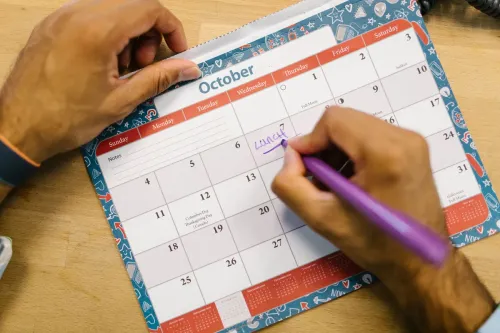
Days of the Week and Months in Tagalog
The days of the week and months in Tagalog are Spanish loanwords. Learn all 7 days and 12 months with pronunciation, plus how to say dates and 'every Monday.'

Tagalog Numbers 1-100: Counting, Time & Money Explained
Learn Tagalog numbers 1-100 and beyond. Master both native and Spanish-derived counting systems, plus telling time, reading prices, and ordinals.