tarukin
tarukín with stress marks
to fathom [it]
From root: tarok
Conjugations
Past (Completed)
tinarok
ti-na-ROK
fathomed
Present (Incomplete)
tinatarok
ti-na-ta-ROK
is being fathomed
Future (Contemplated)
tatarukin
ta-ta-ru-KIN
will be fathomed
Usage Note
Tarukin is the object-focus infinitive of tarok, used when the depth, idea, or meaning being plumbed is the grammatical focus. Most naturally encountered in figurative contexts — measuring the depth of someone's character or the scope of an abstract problem — rather than literal water-sounding.
Examples
" Hirap kong tarukin ang isip niya. "
Natural Translation
I find it hard to fathom his/her mind.
Literal Translation
Hard my to-fathom the mind his/her.
" Subukan mong tarukin ang totoong intensyon ng kanyang puso. "
Natural Translation
Try to fathom the true intention of his/her heart.
Literal Translation
Try you to-fathom the true intention of his/her heart.
" Kahit gaano katagal silang magkasama, hindi pa rin niya lubos na natarok ang tunay na nararamdaman nito. "
Natural Translation
No matter how long they have been together, he/she still cannot fully fathom what the other truly feels.
Literal Translation
Even however long they together, not yet also he/she fully fathomed the true that-being-felt of-this.
Take Tagalog with you
The full course, a 12,500-word dictionary, and flashcards that make every word stick — free to start on iOS and Android.




Tagalog builds thousands of words from a few hundred roots.
How Tagalog words workWord family
tarok has 1 related form built from the same root.
Related Words
Explore Tagalog by topic
Free guides on grammar, vocabulary, and culture to take you past single-word lookups.

Na vs -ng in Tagalog: The Linker Rule Made Simple
When do you use na vs -ng in Tagalog? One simple rule, with clear examples, memory tips, and common mistakes explained for English-speaking beginners.

Tagalog Time Expressions: Past, Present & Future Guide
Tagalog has no tenses — it uses aspect. Learn time words, days of the week, clock time, and the aspect system, with vocabulary tables and cultural notes.
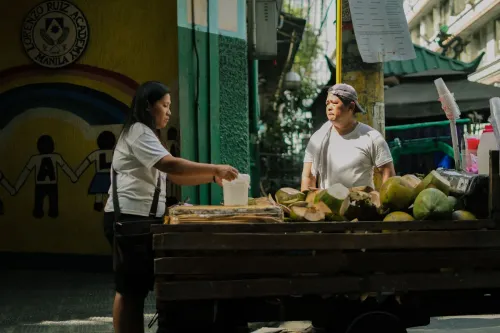
Magkano: How to Ask "How Much" in Tagalog
Magkano means how much in Tagalog. Learn to ask a price, tell it apart from ilan and gaano, sound polite with po, and haggle at the palengke.
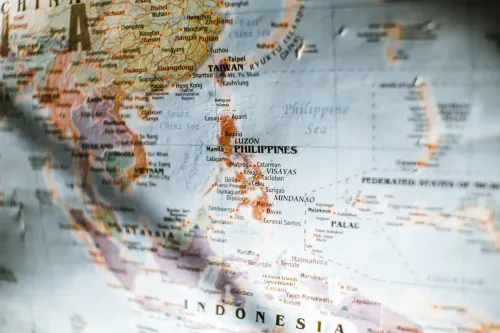
Philippines Geography for Learners: Islands & Language
Philippines geography for Tagalog learners: 7,641 islands, three island groups, and the Southern Luzon heartland where the Tagalog language was born.