From root: tasa
Conjugations
Past (Completed)
nagpatasa
nag-pa-TA-sa
had something sharpened
Present (Incomplete)
nagpapatasa
nag-pa-pa-TA-sa
having something sharpened
Future (Contemplated)
magpapatasa
mag-pa-pa-TA-sa
will have something sharpened
Usage Note
Magpatasa is used when you are not the one doing the sharpening, but are instead asking a classmate or using a machine to do it for you.
Examples
" Magpatasa ka ng lapis sa kaklase mo. "
Natural Translation
Have your classmate sharpen the pencil.
Literal Translation
Have-sharpened you of pencil at classmate your.
" Kailangan mong magpatasa ng lapis. "
Natural Translation
You need to have a pencil sharpened.
Literal Translation
Need you have-sharpened of pencil.
" Dahil sira ang kaniyang pantasa, napilitan siyang magpatasa ng mga lapis sa katabing tindahan bago magsimula ang pagsusulit. "
Natural Translation
Because her sharpener was broken, she was forced to have her pencils sharpened at the nearby store before the exam started.
Literal Translation
Because broken the her sharpener, forced she to have-sharpened of pencils at neighboring store before begin the exam.
Take Tagalog with you
The full course, a 12,500-word dictionary, and flashcards that make every word stick — free to start on iOS and Android.




Tagalog builds thousands of words from a few hundred roots.
How Tagalog words workWord family
tasa has 11 related forms built from the same root.
Related Words
Explore Tagalog by topic
Free guides on grammar, vocabulary, and culture to take you past single-word lookups.

Tagalog Verb Conjugation: Aspects Made Simple
Tagalog verb conjugation uses aspects, not tenses. Learn the three aspects with -um- and mag- verbs, one reduplication rule, and clear example tables.
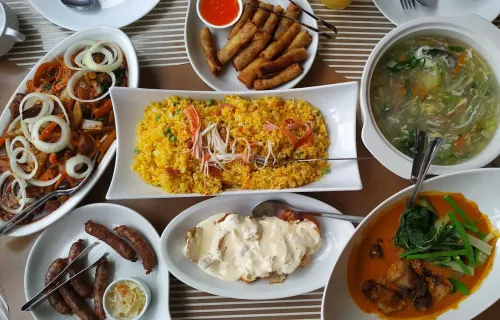
Filipino Food: 12 Essential Dishes (With Tagalog Names)
Filipino food, from adobo to halo-halo: learn the Tagalog names, pronunciations, and ingredients behind 12 dishes you'll want to try on your first trip.

How Long Does It Take to Learn Tagalog?
Survival Tagalog takes ~3-4 weeks and comfortable conversation 6-12 months. FSI's 1,100 hours is the professional bar, not the talking-to-family bar.

Filipino Family Words and Honorifics: Ate, Kuya & Tita
Filipino family words like ate, kuya, tita, tito, lolo, and lola go far beyond family — learn how Filipinos use them with strangers, plus mano po etiquette.