tumikhim
tumikhím with stress marks
to clear one's throat
From root: tikhim
Conjugations
Past (Completed)
tumikhim
tu-mik-HIM
cleared throat
Present (Incomplete)
tumitikhim
tu-mi-tik-HIM
is clearing throat
Future (Contemplated)
titikhim
ti-tik-HIM
will clear throat
Usage Note
Tumikhim is the actor-focus infinitive of tikhim, specifically the soft, deliberate throat-clear used to attract attention or signal one's presence — distinct from coughing due to illness. It is a socially coded gesture in Filipino culture for politely interrupting or signaling that one wishes to speak, especially in formal or hierarchical settings.
Examples
" Tumikhim siya bago magsalita. "
Natural Translation
He cleared his throat before speaking.
Literal Translation
Cleared-throat he before to-speak.
" Bago magsalita sa harap ng mikropono, sinubukan muna niyang tumikhim. "
Natural Translation
Before speaking in front of the microphone, he/she tried clearing his/her throat first.
Literal Translation
Before to-speak at front of microphone tried first he/she to-clear-throat.
" Marahang tumikhim ang guro upang makuha ang atensyon ng klase bago niya simulan ang mahabang talakayan. "
Natural Translation
The teacher gently cleared her throat to get the class's attention before she began the long discussion.
Literal Translation
Gently cleared-throat the teacher in-order-to get the attention of class before she begin the long discussion.
Take Tagalog with you
The full course, a 12,500-word dictionary, and flashcards that make every word stick — free to start on iOS and Android.




Tagalog builds thousands of words from a few hundred roots.
How Tagalog words workRelated Words
Explore Tagalog by topic
Free guides on grammar, vocabulary, and culture to take you past single-word lookups.

Philippines Geography for Learners: Islands & Language
Philippines geography for Tagalog learners: 7,641 islands, three island groups, and the Southern Luzon heartland where the Tagalog language was born.
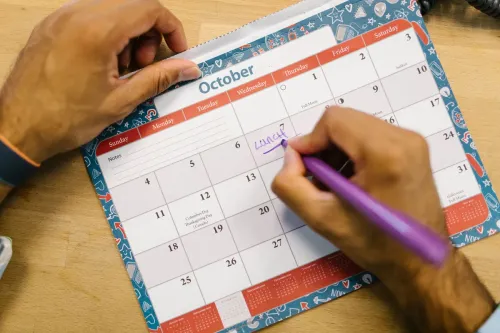
Days of the Week and Months in Tagalog
The days of the week and months in Tagalog are Spanish loanwords. Learn all 7 days and 12 months with pronunciation, plus how to say dates and 'every Monday.'

Ng vs Nang in Tagalog: The Spelling Rule
Ng vs nang sound identical but spell differently. Use ng to mark nouns (of, the object), and nang for how, when, repetition, and counting time.

Po and Opo in Tagalog: Where to Put Them Right
Po and opo confuse learners — but placement follows one rule. Where po goes in a sentence, why it's opo not 'oo po', and the pronoun shift to learn.