tiyan
tiyán with stress marks
abdomen; belly; tummy
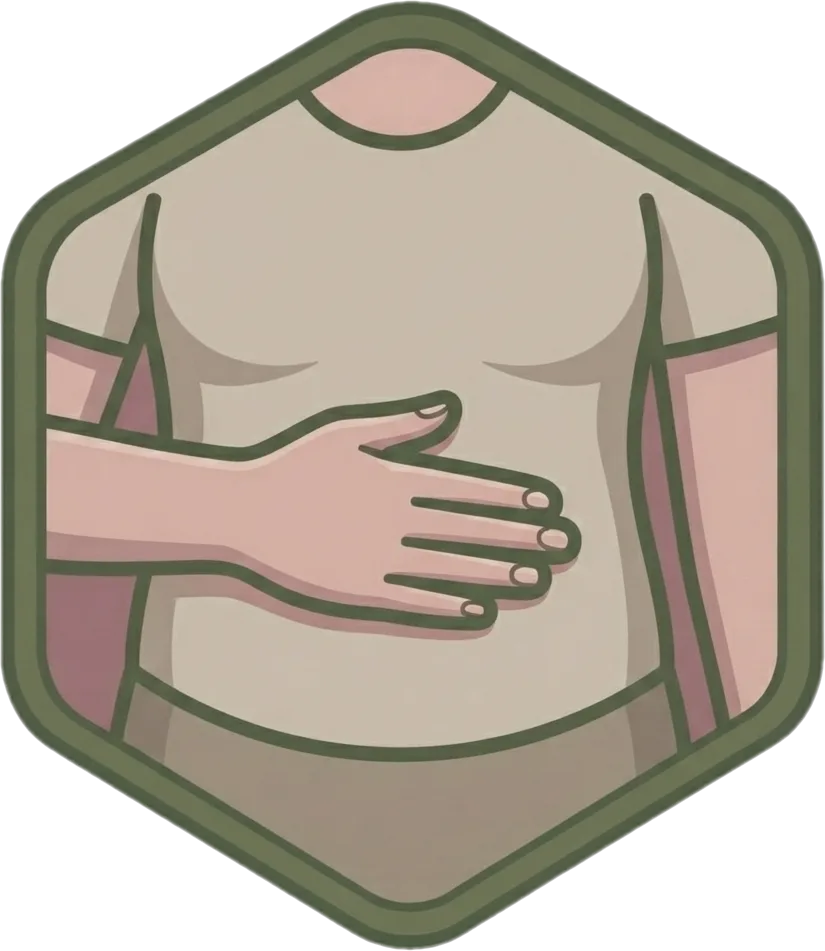
Usage Note
Tiyan is the everyday word for the belly or abdomen, used across all registers from medical to childlike. 'Masakit ang tiyan ko' (my stomach hurts) is one of the most common everyday complaints. In affectionate speech, parents often refer to pregnancy as 'nasa tiyan pa' (still in the belly).
Examples
" Masakit ang tiyan ko. "
Natural Translation
My stomach hurts.
Literal Translation
Painful the belly my.
" Masakit ang aking tiyan ngayon. "
Natural Translation
My belly hurts today.
Literal Translation
Painful the my belly today.
" Kumakalam na ang tiyan ko dahil hindi pa ako nakakakain mula nang umalis tayo kaninang umaga. "
Natural Translation
My stomach is already growling because I haven't eaten since we left this morning.
Literal Translation
Growling already the belly my because not yet I able-to-eat since when left we earlier morning.
Take Tagalog with you
The full course, a 12,500-word dictionary, and flashcards that make every word stick — free to start on iOS and Android.




Tagalog builds thousands of words from a few hundred roots.
How Tagalog words workRelated Words
Explore Tagalog by topic
Free guides on grammar, vocabulary, and culture to take you past single-word lookups.

Mano Po and Filipino Etiquette: A Visitor's Guide
Mano po presses an elder's hand to your forehead as a blessing. Learn who to mano, how to lip-point, and the etiquette that wins over a Filipino family.

Tagalog Time Expressions: Past, Present & Future Guide
Tagalog has no tenses — it uses aspect. Learn time words, days of the week, clock time, and the aspect system, with vocabulary tables and cultural notes.

Tagalog Numbers 1-100: Counting, Time & Money Explained
Learn Tagalog numbers 1-100 and beyond. Master both native and Spanish-derived counting systems, plus telling time, reading prices, and ordinals.

Magkano: How to Ask "How Much" in Tagalog
Magkano means how much in Tagalog. Learn to ask a price, tell it apart from ilan and gaano, sound polite with po, and haggle at the palengke.