tropa
trópa with stress marks
troop
Also means
In colloquial Filipino, tropa also means a close group of friends or a barkada — used warmly and informally.
Usage Note
Tropa comes from Spanish 'tropa' and while the formal meaning is a military troop or unit, the colloquial sense — a tight circle of friends — is extremely common among Filipino youth. The word carries genuine social warmth and is used freely across casual conversation and social media.
Examples
" Lalabas ako kasama ang tropa ko. "
Natural Translation
I'm going out with my friends.
Literal Translation
Will-go-out I with the friends my.
" Dumating ang tropa ng mga sundalo. "
Natural Translation
The troop of soldiers arrived.
Literal Translation
Arrived the troop of soldiers.
" Tuwing Sabado, nagkikita ang buong tropa namin para magbawi sa mga buwan na hindi kami nagkita. "
Natural Translation
Every Saturday, our whole barkada meets up to make up for the months we didn't see each other.
Literal Translation
Every Saturday, meet the whole group our to make-up for the months that not we met.
Take Tagalog with you
The full course, a 12,500-word dictionary, and flashcards that make every word stick — free to start on iOS and Android.




Tagalog builds thousands of words from a few hundred roots.
How Tagalog words workRelated Words
Explore Tagalog by topic
Free guides on grammar, vocabulary, and culture to take you past single-word lookups.

Tagalog Slang Guide: 20 Words You'll Hear on TikTok
Tagalog slang explained: lodi, petmalu, werpa, astig, chika and more. Decode Filipino TikTok comments, group chats, and pop culture with this practical guide.
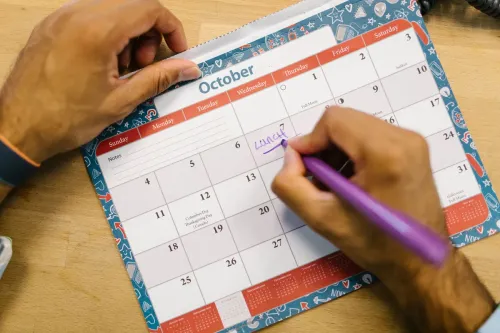
Days of the Week and Months in Tagalog
The days of the week and months in Tagalog are Spanish loanwords. Learn all 7 days and 12 months with pronunciation, plus how to say dates and 'every Monday.'

Tagalog Numbers 1-100: Counting, Time & Money Explained
Learn Tagalog numbers 1-100 and beyond. Master both native and Spanish-derived counting systems, plus telling time, reading prices, and ordinals.

Po and Opo in Tagalog: Where to Put Them Right
Po and opo confuse learners — but placement follows one rule. Where po goes in a sentence, why it's opo not 'oo po', and the pronoun shift to learn.