
From root: tula
Conjugations
Past (Completed)
tinula
ti-nu-LA
recited a poem
Present (Incomplete)
tinutula
ti-nu-tu-LA
reciting a poem
Future (Contemplated)
tutulain
tu-tu-la-IN
will recite a poem
Usage Note
Tulain is used when the specific poem being recited is the focus of the sentence, typically in formal or educational contexts such as school performances and cultural events. It implies a deliberate, artistic delivery of verses to an audience.
Examples
" Tulain mo ang bagong tula. "
Natural Translation
Recite the new poem.
Literal Translation
Recite by-you the new poem.
" Gusto kong tulain ang paborito mong tula. "
Natural Translation
I want to recite your favorite poem.
Literal Translation
Want by-me to-recite the favorite your poem.
" Hiniling ng guro na tulain ng bawat mag-aaral ang kanyang sariling akda sa harap ng buong klase. "
Natural Translation
The teacher asked each student to recite his own work in front of the whole class.
Literal Translation
Requested by-the teacher that to-recite by-each student the his own work in front of-the whole class.
Take Tagalog with you
The full course, a 12,500-word dictionary, and flashcards that make every word stick — free to start on iOS and Android.




Tagalog builds thousands of words from a few hundred roots.
How Tagalog words workWord family
tula has 7 related forms built from the same root.
Related Words
Explore Tagalog by topic
Free guides on grammar, vocabulary, and culture to take you past single-word lookups.
Philippines Geography for Learners: Islands & Language
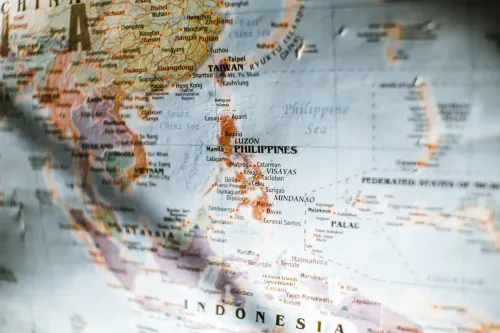
Philippines geography for Tagalog learners: 7,641 islands, three island groups, and the Southern Luzon heartland where the Tagalog language was born.

Magkano: How to Ask "How Much" in Tagalog
Magkano means how much in Tagalog. Learn to ask a price, tell it apart from ilan and gaano, sound polite with po, and haggle at the palengke.

Filipino Family Words and Honorifics: Ate, Kuya & Tita
Filipino family words like ate, kuya, tita, tito, lolo, and lola go far beyond family — learn how Filipinos use them with strangers, plus mano po etiquette.

Tagalog vs Filipino: What's the Difference & Which to Learn
Tagalog and Filipino aren't the same language — but they overlap almost completely. Here's the real difference and which one you should actually learn.