katunggali
katunggáli with stress marks
adversary, opponent
From root: tunggali
Usage Note
Katunggali refers to a rival, opponent, or adversary in a competition, conflict, or debate. It is more formal than 'kalaban' (enemy) and often implies a structured opposition, such as in sports, politics, or legal settings.
Examples
" Malakas ang katunggali namin. "
Natural Translation
Our opponent is strong.
Literal Translation
Strong the opponent our.
" Ang kanyang katunggali sa halalan ay isang kilalang abogado. "
Natural Translation
His/Her opponent in the election is a well-known lawyer.
Literal Translation
The his/her adversary in-the election is a known lawyer.
" Bagaman matindi ang labanan, niyakap pa rin ng manlalaro ang kanyang katunggali matapos ang huling laro. "
Natural Translation
Although the match was intense, the player still embraced his opponent after the final game.
Literal Translation
Although intense the fight, embraced still by-the player the his opponent after the last game.
Take Tagalog with you
The full course, a 12,500-word dictionary, and flashcards that make every word stick — free to start on iOS and Android.




Tagalog builds thousands of words from a few hundred roots.
How Tagalog words workWord family
tunggali has 1 related form built from the same root.
Related Words
Explore Tagalog by topic
Free guides on grammar, vocabulary, and culture to take you past single-word lookups.

Filipino Food: 12 Essential Dishes (With Tagalog Names)
Filipino food, from adobo to halo-halo: learn the Tagalog names, pronunciations, and ingredients behind 12 dishes you'll want to try on your first trip.

Tagalog Word Order: Sentence Structure Made Simple
Why Tagalog puts the verb first, and how ang, ng, and sa markers work. A clear guide to VSO word order, forming questions, and negation.
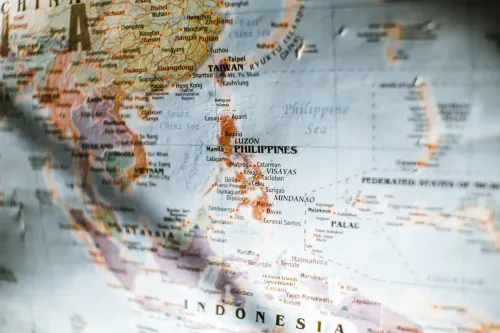
Philippines Geography for Learners: Islands & Language
Philippines geography for Tagalog learners: 7,641 islands, three island groups, and the Southern Luzon heartland where the Tagalog language was born.

Tagalog Numbers 1-100: Counting, Time & Money Explained
Learn Tagalog numbers 1-100 and beyond. Master both native and Spanish-derived counting systems, plus telling time, reading prices, and ordinals.