tuntong
tuntóng with stress marks
to step or tread on
Usage Note
Tuntong means to place one's foot on a surface — to step or tread on something. It is used literally (tuntong sa hagdan — to step on the stairs) and figuratively (tuntong sa tagumpay — to achieve success, literally to step onto success). The word has a careful, deliberate connotation.
Examples
" Huwag mong tuntungan ang bata. "
Natural Translation
Don't step on the child.
Literal Translation
Don't you step-on the child.
" Naramdaman ko ang kanyang tuntong sa aking paa. "
Natural Translation
I felt his/her step on my foot.
Literal Translation
Felt I the his/her step on my foot.
" Bago ka tumuntong sa entablado, huminga ka muna nang malalim para hindi ka kabahan. "
Natural Translation
Before you step onto the stage, take a deep breath first so you won't get nervous.
Literal Translation
Before you step on the stage, breathe you first deeply so not you get-nervous.
Take Tagalog with you
The full course, a 12,500-word dictionary, and flashcards that make every word stick — free to start on iOS and Android.




Tagalog builds thousands of words from a few hundred roots.
How Tagalog words workActor Focus Verbs
Object Focus Verbs
Related Words
Explore Tagalog by topic
Free guides on grammar, vocabulary, and culture to take you past single-word lookups.
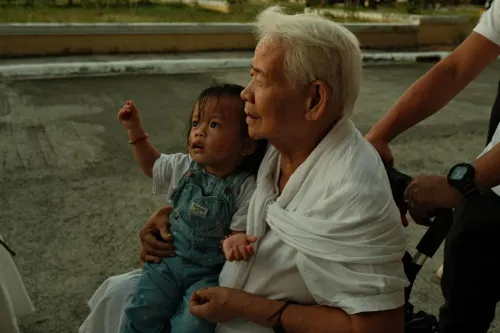
Po and Opo in Tagalog: Where to Put Them Right
Po and opo confuse learners — but placement follows one rule. Where po goes in a sentence, why it's opo not 'oo po', and the pronoun shift to learn.

Languages of the Philippines: Tagalog, Cebuano, and More
Languages of the Philippines: one national language (Filipino) plus 180+ regional languages. Here's who speaks what, where, and why it matters to you.

Mano Po and Filipino Etiquette: A Visitor's Guide
Mano po presses an elder's hand to your forehead as a blessing. Learn who to mano, how to lip-point, and the etiquette that wins over a Filipino family.
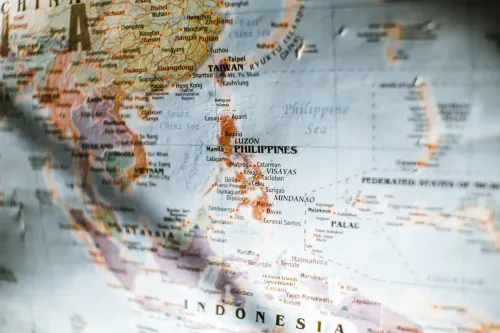
Philippines Geography for Learners: Islands & Language
Philippines geography for Tagalog learners: 7,641 islands, three island groups, and the Southern Luzon heartland where the Tagalog language was born.