From root: ugnay
Conjugations
Past (Completed)
nag-ugnay
nag-ug-NAY
connected
Present (Incomplete)
nag-uugnay
nag-u-ug-NAY
connecting
Future (Contemplated)
mag-uugnay
mag-u-ug-NAY
will connect
Usage Note
Mag-ugnay is used when actively linking or establishing a relationship between ideas, objects, or people. It is frequently used in formal, academic, or professional contexts to describe the act of connecting concepts or coordinating between different entities.
Examples
" Mag-ugnay ka ng dalawang kawad. "
Natural Translation
Connect the two wires.
Literal Translation
Connect you of two wires.
" Kailangan nating mag-ugnay ng dalawang linya. "
Natural Translation
We need to connect the two lines.
Literal Translation
Need we to-connect of two lines.
" Sa pagsusulat ng sanaysay, dapat kang mag-ugnay ng bawat talata upang maging malinaw at magkakaugnay ang iyong mga ideya. "
Natural Translation
In writing an essay, you should connect each paragraph so that your ideas become clear and coherent.
Literal Translation
In writing of essay, should you to-connect of each paragraph so-that become clear and connected the your ideas.
Take Tagalog with you
The full course, a 12,500-word dictionary, and flashcards that make every word stick — free to start on iOS and Android.




Tagalog builds thousands of words from a few hundred roots.
How Tagalog words workWord family
ugnay has 9 related forms built from the same root.
Related Words
Explore Tagalog by topic
Free guides on grammar, vocabulary, and culture to take you past single-word lookups.

Tagalog Pronouns Explained: Complete Chart with Examples
Every Tagalog pronoun explained with clear charts: ang/ng/sa forms, tayo vs kami, ikaw vs ka, politeness markers, and the mistakes beginners make.
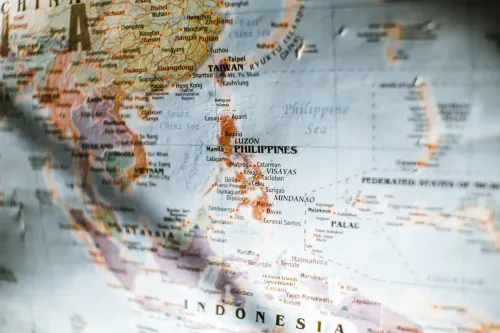
Philippines Geography for Learners: Islands & Language
Philippines geography for Tagalog learners: 7,641 islands, three island groups, and the Southern Luzon heartland where the Tagalog language was born.
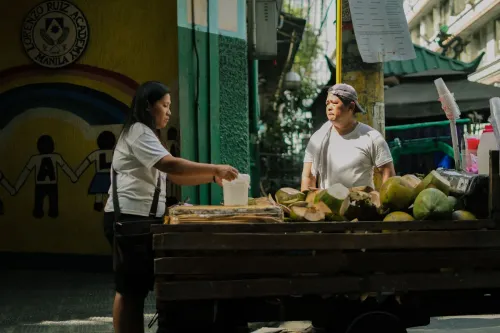
Magkano: How to Ask "How Much" in Tagalog
Magkano means how much in Tagalog. Learn to ask a price, tell it apart from ilan and gaano, sound polite with po, and haggle at the palengke.

Mano Po and Filipino Etiquette: A Visitor's Guide
Mano po presses an elder's hand to your forehead as a blessing. Learn who to mano, how to lip-point, and the etiquette that wins over a Filipino family.