umid
umíd with stress marks
speechless due to shame or fear
Usage Note
Umid describes the state of being rendered silent by shame, fear, or overwhelming embarrassment — unable to speak even when one wants to. It is distinct from being quiet by choice (tahimik) or unable to speak physically. Umid captures the emotional paralysis of hiya (shame) made visible through silence, a nuance deeply rooted in Filipino social dynamics.
Examples
" Umid siya sa hiya. "
Natural Translation
She was speechless from shame.
Literal Translation
Speechless she in shame.
" Naging umid siya nang matuklasan ang kanyang kasinungalingan. "
Natural Translation
He/She was struck speechless when his/her lie was discovered.
Literal Translation
Became speechless he/she when was-discovered the his/her lie.
" Naging umid ang lalaki sa harap ng madla nang biglang itanong ang tungkol sa kanyang nakaraan. "
Natural Translation
The man was struck speechless in front of the crowd when he was suddenly asked about his past.
Literal Translation
Became speechless the man in front of crowd when suddenly was-asked the about his past.
Take Tagalog with you
The full course, a 12,500-word dictionary, and flashcards that make every word stick — free to start on iOS and Android.




Tagalog builds thousands of words from a few hundred roots.
How Tagalog words workRelated Words
Explore Tagalog by topic
Free guides on grammar, vocabulary, and culture to take you past single-word lookups.

Tagalog Greetings: How to Say Hello, Goodbye & Po/Opo
Master Tagalog greetings with pronunciation: kumusta, magandang umaga, po and opo polite forms, time-of-day phrases, and the mano po tradition.

Philippine Christmas Traditions: World's Longest Holiday
Philippine Christmas traditions run four months — from Ber-month carols to Simbang Gabi dawn masses, Noche Buena feasts, and parol lanterns lighting every street.
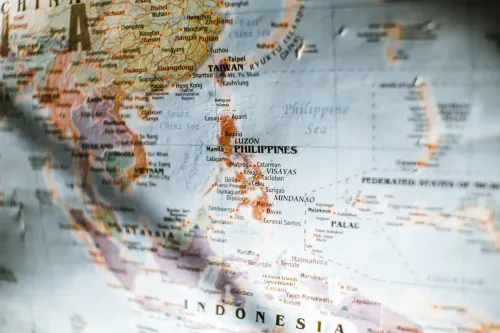
Philippines Geography for Learners: Islands & Language
Philippines geography for Tagalog learners: 7,641 islands, three island groups, and the Southern Luzon heartland where the Tagalog language was born.

Tagalog Question Words: Ano, Sino, Saan & More
Tagalog question words like ano, sino, and saan need the right frame to work. Learn the ang-vs-pronoun rule, confusable pairs, and the ba particle with audio.