umupak
umupák with stress marks
to thrash
From root: upak
Conjugations
Past (Completed)
umupak
u-MU-pak
thrashed
Present (Incomplete)
umuupak
u-mu-U-pak
is thrashing
Future (Contemplated)
uupak
u-U-pak
will thrash
Usage Note
Umupak is the actor-focus form of upak, a vivid colloquial verb with two distinct senses: delivering a severe beating and eating something with great enthusiasm. The dual meaning reflects a Filipino rhetorical pattern where intensity of physical action is applied humorously to appetite, making it common in informal speech and sports commentary.
Examples
" Gusto niyang umupak sa kalaban. "
Natural Translation
He wants to thrash the opponent.
Literal Translation
Want he/she to-thrash on opponent.
" Handa siyang umupak kapag may nanggulo sa kanilang lugar. "
Natural Translation
He/She is ready to thrash anyone who causes trouble in their place.
Literal Translation
Ready he/she to-thrash when there-is disrupted in their place.
" Dahil sa labis na galit, handa nang umupak ang lalaki sa sinumang lumapit sa kanya sa loob ng bar. "
Natural Translation
Out of intense anger, the man was ready to thrash anyone who approached him inside the bar.
Literal Translation
Because of intense anger, ready already to-thrash the man on whoever approached to him at inside of bar.
Take Tagalog with you
The full course, a 12,500-word dictionary, and flashcards that make every word stick — free to start on iOS and Android.




Tagalog builds thousands of words from a few hundred roots.
How Tagalog words workWord family
upak has 1 related form built from the same root.
Related Words
Explore Tagalog by topic
Free guides on grammar, vocabulary, and culture to take you past single-word lookups.

Tagalog Slang Guide: 20 Words You'll Hear on TikTok
Tagalog slang explained: lodi, petmalu, werpa, astig, chika and more. Decode Filipino TikTok comments, group chats, and pop culture with this practical guide.
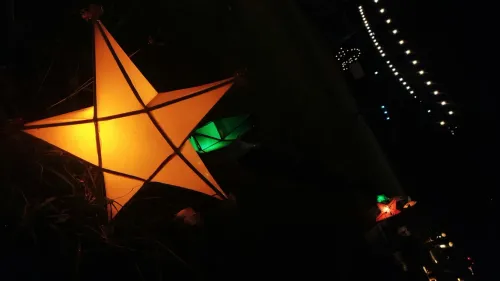
Philippine Christmas Traditions: World's Longest Holiday
Philippine Christmas traditions run four months — from Ber-month carols to Simbang Gabi dawn masses, Noche Buena feasts, and parol lanterns lighting every street.

Magkano: How to Ask "How Much" in Tagalog
Magkano means how much in Tagalog. Learn to ask a price, tell it apart from ilan and gaano, sound polite with po, and haggle at the palengke.

Tagalog Word Order: Sentence Structure Made Simple
Why Tagalog puts the verb first, and how ang, ng, and sa markers work. A clear guide to VSO word order, forming questions, and negation.