Supi!
Supí! with stress marks
expression meaning "Out!" or "Get lost!"
Usage Note
Supi! is a sharp, dismissive exclamation used to shoo away animals — particularly dogs or cats — or to tell someone to leave in a rude or impatient manner. It is analogous to saying 'Shoo!' or 'Get out of here!' and is informal and somewhat coarse when directed at people. Children and elderly speakers use it most commonly for animals.
Examples
" Supi! Layas ka, aso! "
Natural Translation
Shoo! Get away, dog!
Literal Translation
Shoo! Get-away you, dog!
" Supi! Umalis ka dito. "
Natural Translation
Get lost! Leave here.
Literal Translation
Get lost! Leave you here.
" "Supi!" sigaw ng lola habang itinataboy ang pusang gustong umakyat sa mesang may pagkain. "
Natural Translation
"Shoo!" the grandmother shouted while driving away the cat that wanted to climb onto the table with food.
Literal Translation
"Shoo!" shout of grandmother while driving-away the cat that wanting climb onto table that-has food.
Take Tagalog with you
The full course, a 12,500-word dictionary, and flashcards that make every word stick — free to start on iOS and Android.




Tagalog builds thousands of words from a few hundred roots.
How Tagalog words workRelated Words
Explore Tagalog by topic
Free guides on grammar, vocabulary, and culture to take you past single-word lookups.

How to Say Sorry in Tagalog: Patawad vs Pasensya
How to say sorry in Tagalog: patawad, pasensya na, and paumanhin compared on a simple severity-and-formality ladder so you pick the right word every time.

Tagalog Affixes Explained: A Beginner's Guide to Word Building
Tagalog affixes turn one root word into dozens of meanings. Learn prefixes, infixes, suffixes, and circumfixes with clear examples for beginners.

How Long Does It Take to Learn Tagalog?
Survival Tagalog takes ~3-4 weeks and comfortable conversation 6-12 months. FSI's 1,100 hours is the professional bar, not the talking-to-family bar.
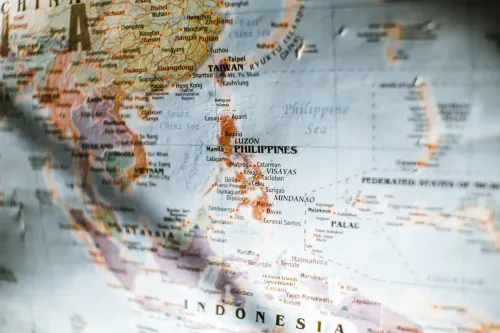
Philippines Geography for Learners: Islands & Language
Philippines geography for Tagalog learners: 7,641 islands, three island groups, and the Southern Luzon heartland where the Tagalog language was born.