boses
bóses with stress marks
voice
Usage Note
Boses comes from Spanish voces (plural of voz) and is the standard Tagalog word for singing or speaking voice. It is widely used in entertainment, music, and everyday speech, and magandang boses (beautiful voice) is one of the most common compliments in Filipino.
Examples
" Maganda ang boses mo. "
Natural Translation
You have a beautiful voice.
Literal Translation
Beautiful the voice your.
" Malakas ang iyong boses. "
Natural Translation
Your voice is loud.
Literal Translation
Loud the your voice.
" Kahit paos na ang boses niya, ipinagpatuloy pa rin niya ang kanta hanggang dulo. "
Natural Translation
Even though his voice was already hoarse, he still continued the song to the very end.
Literal Translation
Even hoarse already the voice his, continued still he the song until end.
Take Tagalog with you
The full course, a 12,500-word dictionary, and flashcards that make every word stick — free to start on iOS and Android.




Tagalog builds thousands of words from a few hundred roots.
How Tagalog words workRelated Words
Explore Tagalog by topic
Free guides on grammar, vocabulary, and culture to take you past single-word lookups.

Filipino Food: 12 Essential Dishes (With Tagalog Names)
Filipino food, from adobo to halo-halo: learn the Tagalog names, pronunciations, and ingredients behind 12 dishes you'll want to try on your first trip.

Ng vs Nang in Tagalog: The Spelling Rule
Ng vs nang sound identical but spell differently. Use ng to mark nouns (of, the object), and nang for how, when, repetition, and counting time.

Tagalog Greetings: How to Say Hello, Goodbye & Po/Opo
Master Tagalog greetings with pronunciation: kumusta, magandang umaga, po and opo polite forms, time-of-day phrases, and the mano po tradition.
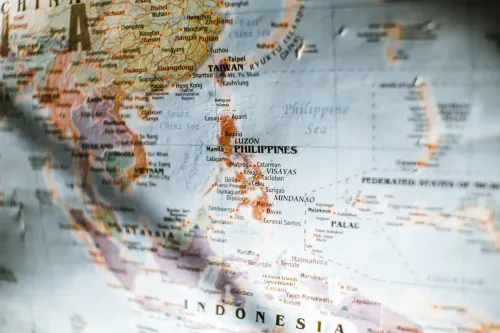
Philippines Geography for Learners: Islands & Language
Philippines geography for Tagalog learners: 7,641 islands, three island groups, and the Southern Luzon heartland where the Tagalog language was born.