buntal
buntál with stress marks
palm fibre; a punch
Also means
In colloquial use, buntal can also mean a heavy punch or blow, as in 'nabuntal siya' (he was punched hard).
Usage Note
Buntal in its primary sense refers to the fine fibre extracted from the leaf stems of the buri palm, used to weave the famous Baliwag hats and other crafts. Buntal hats are a prized Philippine handicraft export. The secondary punch meaning is informal and primarily used in street speech.
Examples
" Gawa sa buntal ang sombrero. "
Natural Translation
The hat is made from palm fibre.
Literal Translation
Made from palm-fibre the hat.
" Kilala ang Bulacan sa magagandang sombrero gawa sa buntal. "
Natural Translation
Bulacan is known for its beautiful hats made from buntal fibre.
Literal Translation
Known the Bulacan for beautiful hats made from buntal.
" Maraming dayuhan ang humahanga sa mga sombrerong gawa sa buntal na hinahabi ng mga manggagawa sa Baliwag. "
Natural Translation
Many foreigners admire the hats made from palm fibre that are woven by the craftsmen of Baliwag.
Literal Translation
Many foreigners the admire in-the hats made from palm-fibre that woven of-the workers in Baliwag.
Take Tagalog with you
The full course, a 12,500-word dictionary, and flashcards that make every word stick — free to start on iOS and Android.




Tagalog builds thousands of words from a few hundred roots.
How Tagalog words workRelated Words
Explore Tagalog by topic
Free guides on grammar, vocabulary, and culture to take you past single-word lookups.

Magkano: How to Ask "How Much" in Tagalog
Magkano means how much in Tagalog. Learn to ask a price, tell it apart from ilan and gaano, sound polite with po, and haggle at the palengke.

Ang, Ng, Sa: The 3 Tagalog Case Markers Explained
Ang, ng, sa are the three Tagalog case markers every noun takes. Learn what each does, the personal forms si/ni/kay, plurals with mga, and clear examples.

How Long Does It Take to Learn Tagalog?
Survival Tagalog takes ~3-4 weeks and comfortable conversation 6-12 months. FSI's 1,100 hours is the professional bar, not the talking-to-family bar.
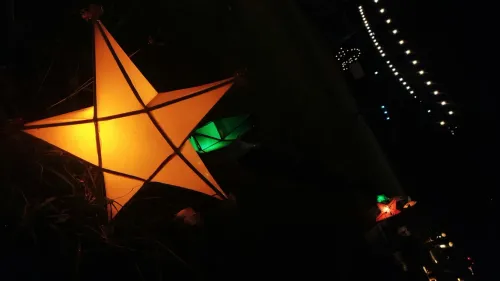
Philippine Christmas Traditions: World's Longest Holiday
Philippine Christmas traditions run four months — from Ber-month carols to Simbang Gabi dawn masses, Noche Buena feasts, and parol lanterns lighting every street.