Usage Note
Hawak describes the physical act of holding or gripping something, commonly used in verbs like 'humawak' (to hold) and 'hawakan' (to hold onto something). Beyond physical touch, it is often used figuratively to mean having control or being in charge of a situation. You will frequently hear 'hawakan mo' as a direct command to grasp an object.
Examples
" Mahigpit ang hawak niya. "
Natural Translation
His grip is tight.
Literal Translation
Tight the grip his.
" Mahigpit ang kaniyang hawak. "
Natural Translation
His/Her grip is tight.
Literal Translation
Tight the his/her grip.
" Siya ang may hawak ng buong negosyo, kaya lahat ng mahahalagang desisyon ay dumadaan muna sa kaniya. "
Natural Translation
He is the one who holds the entire business, so all important decisions pass through him first.
Literal Translation
He the one-who-has grip of whole business, so all of important decisions are passing first to him.
Take Tagalog with you
The full course, a 12,500-word dictionary, and flashcards that make every word stick — free to start on iOS and Android.




Tagalog builds thousands of words from a few hundred roots.
How Tagalog words workDerived Words
Actor Focus Verbs
Object Focus Verbs
Related Words
Explore Tagalog by topic
Free guides on grammar, vocabulary, and culture to take you past single-word lookups.

Po and Opo in Tagalog: Where to Put Them Right
Po and opo confuse learners — but placement follows one rule. Where po goes in a sentence, why it's opo not 'oo po', and the pronoun shift to learn.

Na vs -ng in Tagalog: The Linker Rule Made Simple
When do you use na vs -ng in Tagalog? One simple rule, with clear examples, memory tips, and common mistakes explained for English-speaking beginners.

Seasons in the Philippines: A Tagalog Guide
The Philippines has two seasons, not four. Learn tag-araw, tag-ulan, and taglamig, the generative tag- prefix, and the weather vocabulary to match.
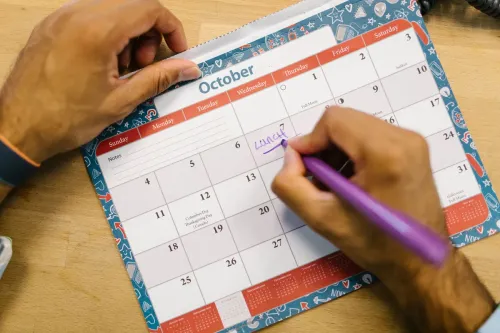
Days of the Week and Months in Tagalog
The days of the week and months in Tagalog are Spanish loanwords. Learn all 7 days and 12 months with pronunciation, plus how to say dates and 'every Monday.'