From root: ibig
Conjugations
Past (Completed)
umibig
u-MI-big
loved
Present (Incomplete)
umiibig
u-mi-I-big
loving
Future (Contemplated)
iibig
i-I-big
will love
Usage Note
Umibig is a poetic and formal term for falling in love, frequently encountered in literature, songs, and classic cinema. While it carries a deep emotional weight, the word 'magmahal' is more commonly used in everyday modern conversations.
Examples
" Natuto akong umibig. "
Natural Translation
I learned to love.
Literal Translation
Learned I to-love.
" Hindi madaling umibig muli. "
Natural Translation
It is not easy to fall in love again.
Literal Translation
Not easy to-love again.
" Bagaman maraming beses na siyang nasaktan, hindi pa rin siya natatakot na muling umibig nang buong puso. "
Natural Translation
Although she has been hurt many times, she is still not afraid to love wholeheartedly again.
Literal Translation
Although many times already she got-hurt, not still she afraid to again to-love with whole heart.
Take Tagalog with you
The full course, a 12,500-word dictionary, and flashcards that make every word stick — free to start on iOS and Android.




Tagalog builds thousands of words from a few hundred roots.
How Tagalog words workWord family
ibig has 8 related forms built from the same root.
Related Words
Explore Tagalog by topic
Free guides on grammar, vocabulary, and culture to take you past single-word lookups.
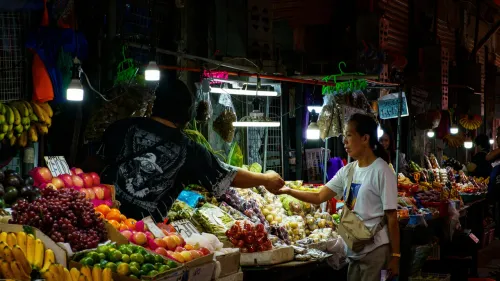
Tagalog Numbers 1-100: Counting, Time & Money Explained
Learn Tagalog numbers 1-100 and beyond. Master both native and Spanish-derived counting systems, plus telling time, reading prices, and ordinals.

Tagalog Root Words: Learn a Few Hundred, Understand Thousands
Tagalog root words unlock vocabulary fast: learn a few hundred and recognize thousands. Real word families, examples, and a practical study strategy.
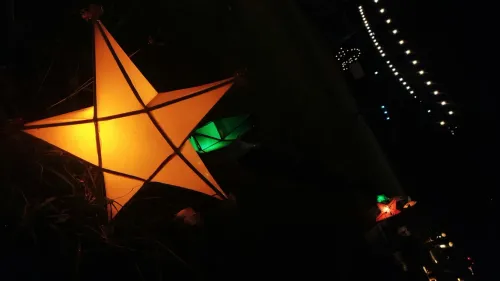
Philippine Christmas Traditions: World's Longest Holiday
Philippine Christmas traditions run four months — from Ber-month carols to Simbang Gabi dawn masses, Noche Buena feasts, and parol lanterns lighting every street.
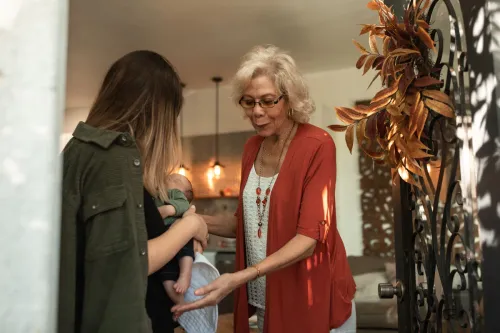
Mano Po and Filipino Etiquette: A Visitor's Guide
Mano po presses an elder's hand to your forehead as a blessing. Learn who to mano, how to lip-point, and the etiquette that wins over a Filipino family.