Also means
Ire can also refer to a bodily straining effort, as in childbirth or defecation, when used as a root noun in different contexts.
Usage Note
Ire is a demonstrative pronoun used in some Tagalog dialects to point to something near the speaker, similar to ito. It is more common in regional varieties and older or rural speech; standard Metro Manila Tagalog typically uses ito instead.
Examples
" Akin ang ire. "
Natural Translation
This one here is mine.
Literal Translation
Mine the this-here.
" Kunin mo ang ire. "
Natural Translation
Take this one here.
Literal Translation
Take you the this-here.
" Sa lalawigan namin, sinasabi pa rin ng mga matatanda ang ire imbes na ito kapag may itinuturo silang malapit. "
Natural Translation
In our province, the elders still say "ire" instead of "ito" when they point to something nearby.
Literal Translation
In province our, say still the elders the this-here instead that this when there pointing they nearby.
Take Tagalog with you
The full course, a 12,500-word dictionary, and flashcards that make every word stick — free to start on iOS and Android.




Tagalog builds thousands of words from a few hundred roots.
How Tagalog words workRelated Words
Explore Tagalog by topic
Free guides on grammar, vocabulary, and culture to take you past single-word lookups.

Filipino Family Words and Honorifics: Ate, Kuya & Tita
Filipino family words like ate, kuya, tita, tito, lolo, and lola go far beyond family — learn how Filipinos use them with strangers, plus mano po etiquette.
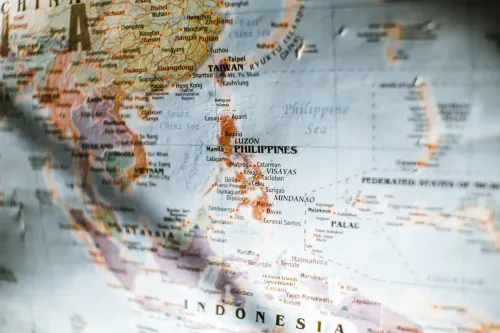
Philippines Geography for Learners: Islands & Language
Philippines geography for Tagalog learners: 7,641 islands, three island groups, and the Southern Luzon heartland where the Tagalog language was born.

Tagalog Numbers 1-100: Counting, Time & Money Explained
Learn Tagalog numbers 1-100 and beyond. Master both native and Spanish-derived counting systems, plus telling time, reading prices, and ordinals.

Mano Po and Filipino Etiquette: A Visitor's Guide
Mano po presses an elder's hand to your forehead as a blessing. Learn who to mano, how to lip-point, and the etiquette that wins over a Filipino family.