kukutin
kukutín with stress marks
to pick at [it]
From root: kukot
Conjugations
Past (Completed)
kinukot
ki-nu-KOT
picked at
Present (Incomplete)
kinukukot
ki-nu-ku-KOT
is being picked at
Future (Contemplated)
kukukutin
ku-ku-ku-TIN
will be picked at
Usage Note
Kukutin is the object-focus -in form of kukot, focusing on the snack being picked at piece by piece — popcorn, chips, nuts. The root conveys leisurely, repeated small-portion eating rather than a full meal, and is associated with idle snacking while watching a film, waiting, or socializing; the tone is casual and affectionate rather than critical.
Examples
" Huwag mong kukutin ang pagkain. "
Natural Translation
Don't pick at the food.
Literal Translation
Don't you to-pick-at the food.
" Hilig ng bata na kukutin ang natitirang ulam sa plato. "
Natural Translation
It is the child's habit to pick at the remaining food on the plate.
Literal Translation
Habit of child to pick at the remaining side-dish on plate.
" Habang nanonood kami ng pelikula, inuumpisahan ng bata na kukutin ang popcorn nang paunti-unti hanggang sa maubos ito. "
Natural Translation
While we were watching a movie, the child started to pick at the popcorn little by little until it was all gone.
Literal Translation
While watching we of movie, started of child to-pick-at the popcorn little-by-little until ran-out it.
Take Tagalog with you
The full course, a 12,500-word dictionary, and flashcards that make every word stick — free to start on iOS and Android.




Tagalog builds thousands of words from a few hundred roots.
How Tagalog words workWord family
kukot has 1 related form built from the same root.
Related Words
Explore Tagalog by topic
Free guides on grammar, vocabulary, and culture to take you past single-word lookups.

Na vs -ng in Tagalog: The Linker Rule Made Simple
When do you use na vs -ng in Tagalog? One simple rule, with clear examples, memory tips, and common mistakes explained for English-speaking beginners.

Mano Po and Filipino Etiquette: A Visitor's Guide
Mano po presses an elder's hand to your forehead as a blessing. Learn who to mano, how to lip-point, and the etiquette that wins over a Filipino family.

Filipino Family Words and Honorifics: Ate, Kuya & Tita
Filipino family words like ate, kuya, tita, tito, lolo, and lola go far beyond family — learn how Filipinos use them with strangers, plus mano po etiquette.
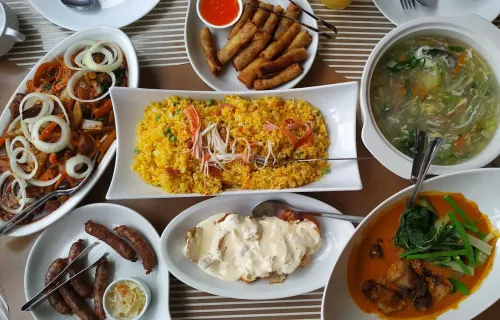
Filipino Food: 12 Essential Dishes (With Tagalog Names)
Filipino food, from adobo to halo-halo: learn the Tagalog names, pronunciations, and ingredients behind 12 dishes you'll want to try on your first trip.