Usage Note
Kuna is a Spanish loanword (from cuna) for a baby's crib or cradle, used in domestic and parenting contexts. In traditional Filipino households, the woven hammock-style duyan was used alongside the kuna, so the two words often appear together in discussions of infant care.
Examples
" Natutulog ang sanggol sa kuna. "
Natural Translation
The baby is sleeping in the crib.
Literal Translation
Sleeping the baby in-the crib.
" Inilagay ng nanay ang sanggol sa kuna. "
Natural Translation
The mother placed the baby in the crib.
Literal Translation
Placed the mother the baby in-the crib.
" Bago dumating ang sanggol, inihanda na nila ang kuna sa tabi ng kama upang madaling masilip ito sa gabi. "
Natural Translation
Before the baby arrived, they had already prepared the crib beside the bed so it could be easily checked at night.
Literal Translation
Before arrive the baby, prepared already they the crib at side of-the bed so-that easily be-peeked-at this at night.
Take Tagalog with you
The full course, a 12,500-word dictionary, and flashcards that make every word stick — free to start on iOS and Android.




Tagalog builds thousands of words from a few hundred roots.
How Tagalog words workRelated Words
Explore Tagalog by topic
Free guides on grammar, vocabulary, and culture to take you past single-word lookups.
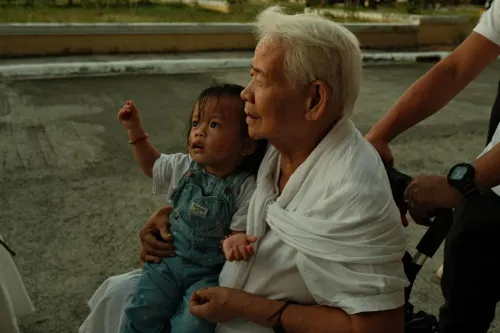
Po and Opo in Tagalog: Where to Put Them Right
Po and opo confuse learners — but placement follows one rule. Where po goes in a sentence, why it's opo not 'oo po', and the pronoun shift to learn.
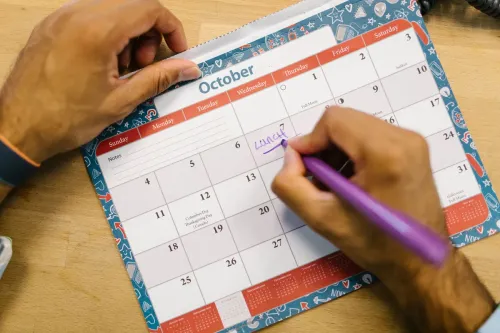
Days of the Week and Months in Tagalog
The days of the week and months in Tagalog are Spanish loanwords. Learn all 7 days and 12 months with pronunciation, plus how to say dates and 'every Monday.'
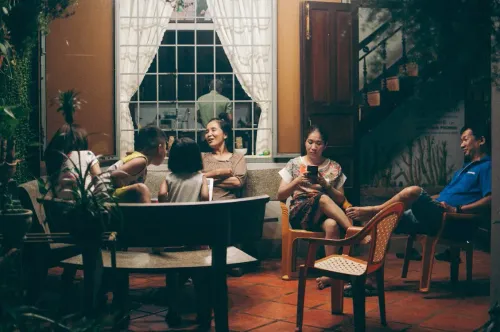
Filipino Family Words and Honorifics: Ate, Kuya & Tita
Filipino family words like ate, kuya, tita, tito, lolo, and lola go far beyond family — learn how Filipinos use them with strangers, plus mano po etiquette.

Magkano: How to Ask "How Much" in Tagalog
Magkano means how much in Tagalog. Learn to ask a price, tell it apart from ilan and gaano, sound polite with po, and haggle at the palengke.