From root: kwento
Usage Note
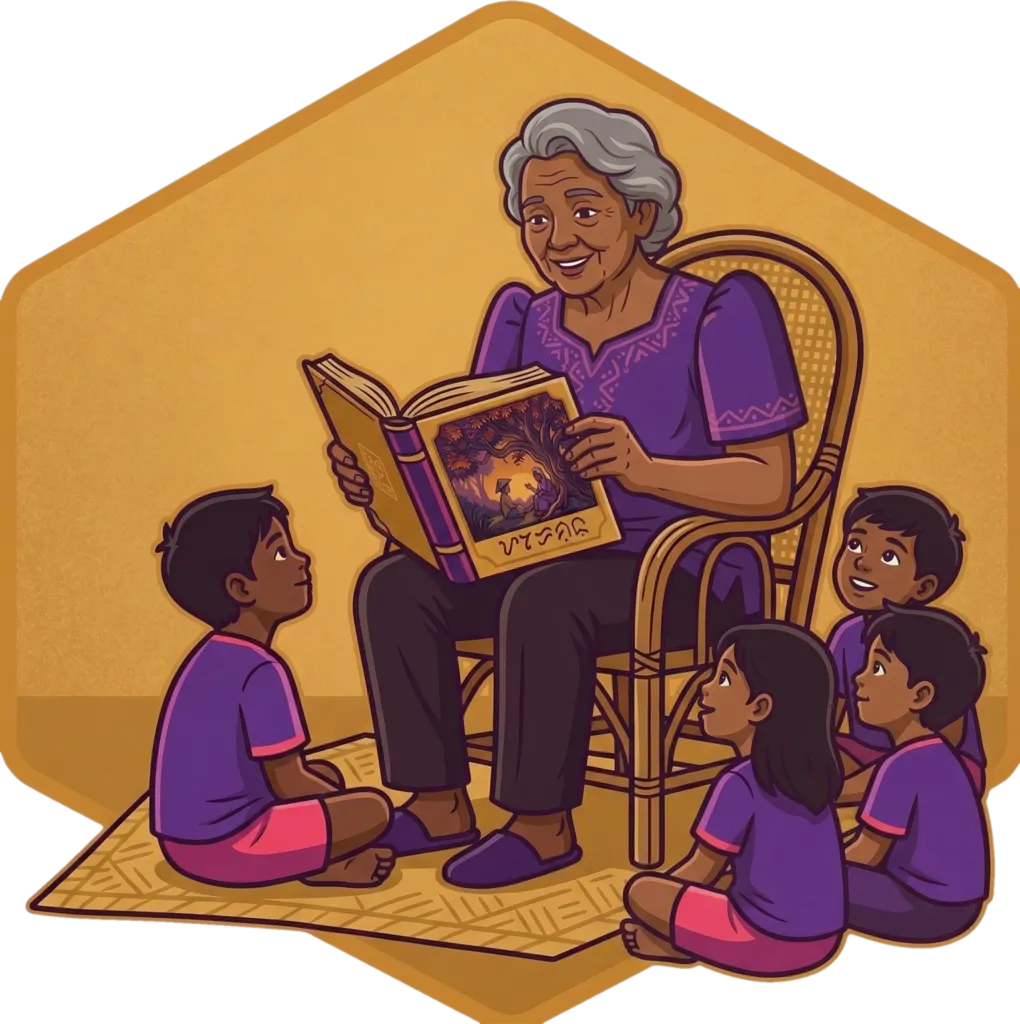
Pagkukuwento refers to the act or manner of narrating a story. It is often used to describe the performance or process of sharing information.
Examples
" Masaya ang pagkukuwento niya. "
Natural Translation
His storytelling is fun.
Literal Translation
Fun the storytelling his.
" Magaling siya sa pagkukuwento. "
Natural Translation
He/she is good at storytelling.
Literal Translation
Good he/she at storytelling.
" Sa kanyang pagkukuwento tungkol sa digmaan, naramdaman naming parang naroon kami sa eksena. "
Natural Translation
In his storytelling about the war, we felt as if we were there in the scene.
Literal Translation
In his storytelling about the war, felt by-us as-if there we in the scene.
Take Tagalog with you
The full course, a 12,500-word dictionary, and flashcards that make every word stick — free to start on iOS and Android.




Tagalog builds thousands of words from a few hundred roots.
How Tagalog words workWord family
kwento has 7 related forms built from the same root.
Related Words
Explore Tagalog by topic
Free guides on grammar, vocabulary, and culture to take you past single-word lookups.

Tagalog Greetings: How to Say Hello, Goodbye & Po/Opo
Master Tagalog greetings with pronunciation: kumusta, magandang umaga, po and opo polite forms, time-of-day phrases, and the mano po tradition.

Magkano: How to Ask "How Much" in Tagalog
Magkano means how much in Tagalog. Learn to ask a price, tell it apart from ilan and gaano, sound polite with po, and haggle at the palengke.

Spaced Repetition for Tagalog: How Flashcards Make Words Stick
Cramming Tagalog vocabulary fails. See how spaced repetition — the science behind smart flashcards — makes words stick for the long term.

Filipino Family Words and Honorifics: Ate, Kuya & Tita
Filipino family words like ate, kuya, tita, tito, lolo, and lola go far beyond family — learn how Filipinos use them with strangers, plus mano po etiquette.