From root: langoy
Conjugations
Past (Completed)
nilanguyan
ni-la-ngu-YAN
swam in a certain place
Present (Incomplete)
nilalanguyan
ni-la-la-ngu-YAN
swimming in a certain place
Future (Contemplated)
lalanguyan
la-la-ngu-YAN
will swim in a certain place
Usage Note
Languyan is used when the focus of the sentence is the specific location or body of water where the swimming occurs. It is often used to emphasize the place being utilized for swimming rather than the action itself.
Examples
" Languyan natin ang dagat. "
Natural Translation
Let's swim in the sea.
Literal Translation
Swim-in we the sea.
" Gusto kong languyan ang dagat. "
Natural Translation
I want to swim in the sea.
Literal Translation
Want I swim-in the sea.
" Kapag mainit ang panahon, gusto naming languyan ang malinaw na batis sa likod ng aming bahay. "
Natural Translation
When the weather is hot, we want to swim in the clear stream behind our house.
Literal Translation
When hot the weather, want we swim-in the clear stream at back of our house.
Take Tagalog with you
The full course, a 12,500-word dictionary, and flashcards that make every word stick — free to start on iOS and Android.




Tagalog builds thousands of words from a few hundred roots.
How Tagalog words workWord family
langoy has 7 related forms built from the same root.
Related Words
Explore Tagalog by topic
Free guides on grammar, vocabulary, and culture to take you past single-word lookups.

Spaced Repetition for Tagalog: How Flashcards Make Words Stick
Cramming Tagalog vocabulary fails. See how spaced repetition — the science behind smart flashcards — makes words stick for the long term.

Philippine Christmas Traditions: World's Longest Holiday
Philippine Christmas traditions run four months — from Ber-month carols to Simbang Gabi dawn masses, Noche Buena feasts, and parol lanterns lighting every street.
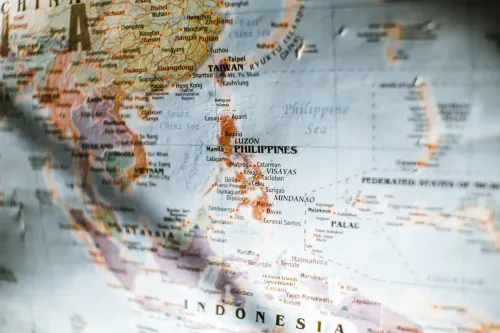
Philippines Geography for Learners: Islands & Language
Philippines geography for Tagalog learners: 7,641 islands, three island groups, and the Southern Luzon heartland where the Tagalog language was born.

Tagalog vs Filipino: What's the Difference & Which to Learn
Tagalog and Filipino aren't the same language — but they overlap almost completely. Here's the real difference and which one you should actually learn.