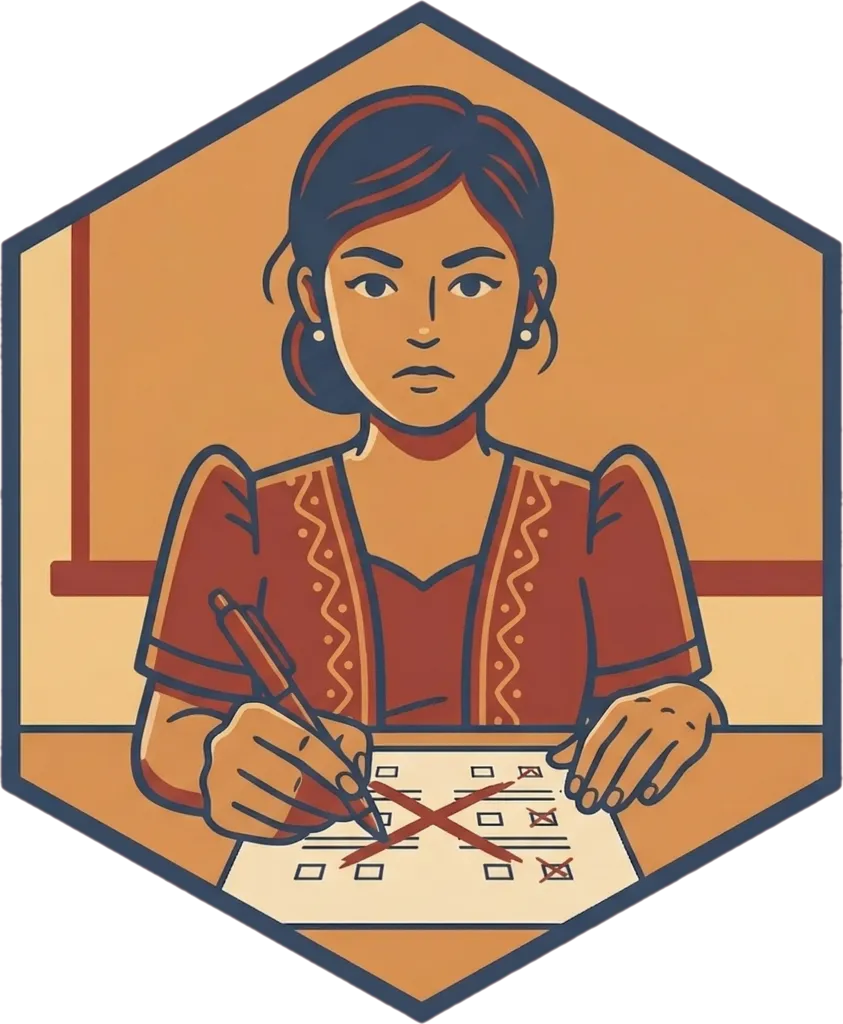
From root: mali
Conjugations
Past (Completed)
nagkamali
nag-ka-ma-LI
made a mistake
Present (Incomplete)
nagkakamali
nag-ka-ka-ma-LI
making a mistake
Future (Contemplated)
magkakamali
mag-ka-ka-ma-LI
will make a mistake
Usage Note
Magkamali is used when someone makes an error or a mistake, often unintentionally, in judgment or action. It is commonly used in daily conversation to apologize or admit a fault.
Examples
" Madalas akong magkamali. "
Natural Translation
I often make mistakes.
Literal Translation
Often I to-make-mistake.
" Tao lang na magkamali. "
Natural Translation
It is human to make a mistake.
Literal Translation
Person only to make a mistake.
" Natural lang na magkamali ang isang baguhan, basta't matuto siya at hindi niya ulitin ang parehong pagkakamali. "
Natural Translation
It's only natural for a beginner to make mistakes, as long as they learn and don't repeat the same error.
Literal Translation
Natural only to-make-mistake the a beginner, as-long-as learn he and not he repeat the same mistake.
Take Tagalog with you
The full course, a 12,500-word dictionary, and flashcards that make every word stick — free to start on iOS and Android.




Tagalog builds thousands of words from a few hundred roots.
How Tagalog words workWord family
mali has 5 related forms built from the same root.
Related Words
Explore Tagalog by topic
Free guides on grammar, vocabulary, and culture to take you past single-word lookups.

Philippine Christmas Traditions: World's Longest Holiday
Philippine Christmas traditions run four months — from Ber-month carols to Simbang Gabi dawn masses, Noche Buena feasts, and parol lanterns lighting every street.
Tagalog vs Filipino: What's the Difference & Which to Learn
Tagalog and Filipino aren't the same language — but they overlap almost completely. Here's the real difference and which one you should actually learn.
May vs Mayroon vs Meron: Have & There Is
May vs mayroon in Tagalog finally made simple: one rule decides which to use, plus how meron and wala fit the same have and there-is family.

Mano Po and Filipino Etiquette: A Visitor's Guide
Mano po presses an elder's hand to your forehead as a blessing. Learn who to mano, how to lip-point, and the etiquette that wins over a Filipino family.