malumi
malumî with stress marks
penultimate accent with glottal catch
Usage Note
Malumi is a Tagalog grammatical term for words stressed on the penultimate syllable that also end with a glottal stop. It is one of four classical accent types alongside malumay, mabilis, and maragsa, and is important for distinguishing homophones in formal grammar study.
Examples
" Malumi ang salitang ito. "
Natural Translation
This word has a glottal penultimate accent.
Literal Translation
Glottal-penultimate-accented the word this.
" Ang salitang ito ay malumi. "
Natural Translation
This word has a penultimate accent with a glottal catch.
Literal Translation
The word this is penultimate accent with glottal catch.
" Mahalagang malaman kung malumi o malumay ang isang salita, sapagkat nagbabago ang kahulugan kung saan napupunta ang diin at impit. "
Natural Translation
It is important to know whether a word is malumi or malumay, because the meaning changes depending on where the stress and glottal stop fall.
Literal Translation
Important to-know if glottal-accented or soft-accented the one word, because changes the meaning where goes the stress and glottal-stop.
Take Tagalog with you
The full course, a 12,500-word dictionary, and flashcards that make every word stick — free to start on iOS and Android.




Tagalog builds thousands of words from a few hundred roots.
How Tagalog words workRelated Words
Explore Tagalog by topic
Free guides on grammar, vocabulary, and culture to take you past single-word lookups.

How to Say "I Love You" in Tagalog: Phrases & Meaning
Learn how to say I love you in Tagalog. Mahal kita, Iniibig kita, and Filipino terms of endearment for partners, family, and friends — with cultural notes.

Days of the Week and Months in Tagalog
The days of the week and months in Tagalog are Spanish loanwords. Learn all 7 days and 12 months with pronunciation, plus how to say dates and 'every Monday.'
May vs Mayroon vs Meron: Have & There Is
May vs mayroon in Tagalog finally made simple: one rule decides which to use, plus how meron and wala fit the same have and there-is family.
Philippines Geography for Learners: Islands & Language
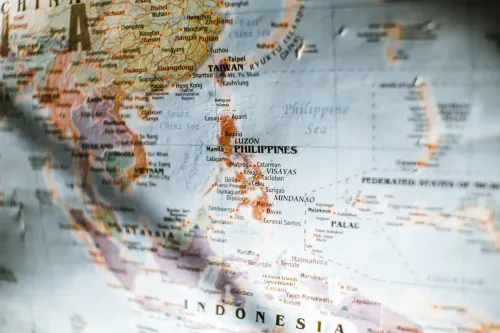
Philippines geography for Tagalog learners: 7,641 islands, three island groups, and the Southern Luzon heartland where the Tagalog language was born.