ngalumbaba
ngalumbabà with stress marks
resting chin on the palm/arm
Usage Note
Ngalumbaba refers to the posture of propping one's chin on the palm or forearm, typically associated with boredom, daydreaming, or deep thought. It is a precise, evocative term that illustrates how Tagalog captures body language in single words.
Examples
" Nakangalumbaba ang bata sa mesa. "
Natural Translation
The child is resting their chin on their hand at the table.
Literal Translation
Resting-chin-on-hand the child at table.
" Ang ngalumbaba ng bata ay tanda ng lungkot. "
Natural Translation
The child's resting of their chin on their palm is a sign of sadness.
Literal Translation
The resting-chin-on-palm of child is sign of sadness.
" Habang naghihintay ng guro, nakangalumbaba siya sa bintana na parang malayo ang isip sa loob ng silid-aralan. "
Natural Translation
While waiting for the teacher, he/she rested their chin on their hand by the window as if their mind were far away inside the classroom.
Literal Translation
While waiting of teacher, resting-chin-on-hand he/she at window like far the mind inside of classroom.
Take Tagalog with you
The full course, a 12,500-word dictionary, and flashcards that make every word stick — free to start on iOS and Android.




Tagalog builds thousands of words from a few hundred roots.
How Tagalog words workRelated Words
Explore Tagalog by topic
Free guides on grammar, vocabulary, and culture to take you past single-word lookups.
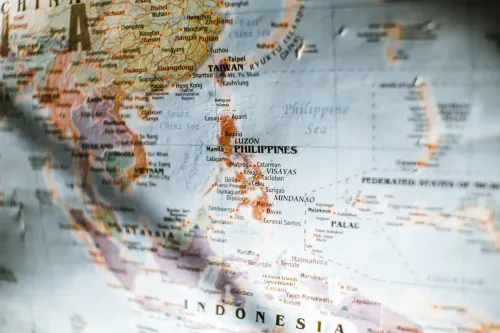
Philippines Geography for Learners: Islands & Language
Philippines geography for Tagalog learners: 7,641 islands, three island groups, and the Southern Luzon heartland where the Tagalog language was born.

Filipino Family Words and Honorifics: Ate, Kuya & Tita
Filipino family words like ate, kuya, tita, tito, lolo, and lola go far beyond family — learn how Filipinos use them with strangers, plus mano po etiquette.
Days of the Week and Months in Tagalog
The days of the week and months in Tagalog are Spanish loanwords. Learn all 7 days and 12 months with pronunciation, plus how to say dates and 'every Monday.'

Magkano: How to Ask "How Much" in Tagalog
Magkano means how much in Tagalog. Learn to ask a price, tell it apart from ilan and gaano, sound polite with po, and haggle at the palengke.