nginig
nginíg with stress marks
tremble; shiver
Usage Note
Nginig refers to the involuntary trembling or shivering caused by cold, fear, or intense emotion. It is most commonly used in its verb form 'manginig' (e.g., nanginginig) to describe someone who is currently shaking.
Examples
" May nginig ang kaniyang kamay. "
Natural Translation
His/Her hand has a tremble.
Literal Translation
Has tremble the his/her hand.
" May nginig ang boses niya. "
Natural Translation
His/Her voice has a quiver.
Literal Translation
Have tremble the voice his/her.
" Halatang-halata ang nginig sa boses niya habang kinukuwento ang nakakatakot na karanasan kagabi. "
Natural Translation
The tremble in his/her voice was very obvious while telling the frightening experience from last night.
Literal Translation
Very-obvious the tremble in voice his/her while telling the scary experience last-night.
Take Tagalog with you
The full course, a 12,500-word dictionary, and flashcards that make every word stick — free to start on iOS and Android.




Tagalog builds thousands of words from a few hundred roots.
How Tagalog words workActor Focus Verbs
Object Focus Verbs
Related Words
Explore Tagalog by topic
Free guides on grammar, vocabulary, and culture to take you past single-word lookups.

Spaced Repetition for Tagalog: How Flashcards Make Words Stick
Cramming Tagalog vocabulary fails. See how spaced repetition — the science behind smart flashcards — makes words stick for the long term.
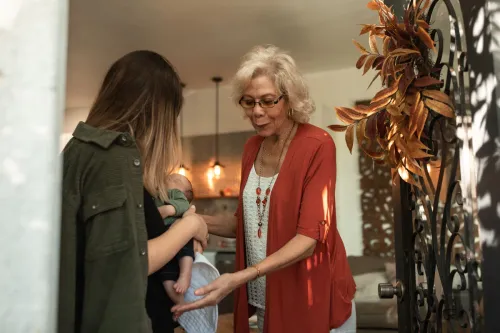
Mano Po and Filipino Etiquette: A Visitor's Guide
Mano po presses an elder's hand to your forehead as a blessing. Learn who to mano, how to lip-point, and the etiquette that wins over a Filipino family.

Tagalog Affixes Explained: A Beginner's Guide to Word Building
Tagalog affixes turn one root word into dozens of meanings. Learn prefixes, infixes, suffixes, and circumfixes with clear examples for beginners.

Tagalog Greetings: How to Say Hello, Goodbye & Po/Opo
Master Tagalog greetings with pronunciation: kumusta, magandang umaga, po and opo polite forms, time-of-day phrases, and the mano po tradition.