napakapakla
very acrid or astringent
From root: pakla
Usage Note
Napakapakla is used to emphasize an intense drying sensation when eating something extremely unripe.
Examples
" Napakapakla ng bunga nito. "
Natural Translation
Its fruit is so astringent.
Literal Translation
Very-astringent of fruit of-this.
" Napakapakla ng hilaw na saging. "
Natural Translation
Raw bananas are very astringent.
Literal Translation
Very-astringent of raw banana.
" Napakapakla ng hilaw na bayabas kaya napilitan akong iluwa ito matapos kong subukan. "
Natural Translation
The unripe guava is so astringent that I was forced to spit it out after trying it.
Literal Translation
Very-astringent of raw guava so forced I-to spit-out it after I-to try.
Take Tagalog with you
The full course, a 12,500-word dictionary, and flashcards that make every word stick — free to start on iOS and Android.




Tagalog builds thousands of words from a few hundred roots.
How Tagalog words workWord family
pakla has 3 related forms built from the same root.
Related Words
Explore Tagalog by topic
Free guides on grammar, vocabulary, and culture to take you past single-word lookups.
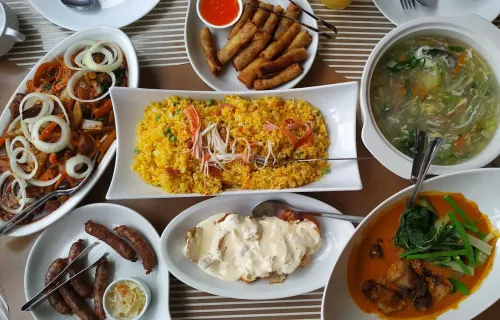
Filipino Food: 12 Essential Dishes (With Tagalog Names)
Filipino food, from adobo to halo-halo: learn the Tagalog names, pronunciations, and ingredients behind 12 dishes you'll want to try on your first trip.

Ng vs Nang in Tagalog: The Spelling Rule
Ng vs nang sound identical but spell differently. Use ng to mark nouns (of, the object), and nang for how, when, repetition, and counting time.

How to Say Sorry in Tagalog: Patawad vs Pasensya
How to say sorry in Tagalog: patawad, pasensya na, and paumanhin compared on a simple severity-and-formality ladder so you pick the right word every time.

Po and Opo in Tagalog: Where to Put Them Right
Po and opo confuse learners — but placement follows one rule. Where po goes in a sentence, why it's opo not 'oo po', and the pronoun shift to learn.