pare
páre with stress marks
buddy; pal; bro (between men)
Usage Note
Pare is how Filipino men address a male friend — 'buddy', 'man', 'bro'. It is short for kumpare, the godparent bond from Spanish compadre, but today it needs no such tie and is even used with friendly strangers of the same age. It shortens further to 'pre; the term between women is mare.
Examples
" Salamat, pare. "
Natural Translation
Thanks, man.
Literal Translation
Thanks, buddy.
" Pare, sama ka sa amin mamaya? "
Natural Translation
Dude, are you coming with us later?
Literal Translation
Buddy, come-along you with us later?
" Pare, pasensya na at hindi ako nakapunta sa kasal mo dahil biglang nagkasakit ang anak ko. "
Natural Translation
Bro, I'm sorry I couldn't make it to your wedding because my kid suddenly got sick.
Literal Translation
Buddy, patience already and not I was-able-to-go to wedding your because suddenly got-sick the child my.
Take Tagalog with you
The full course, a 12,500-word dictionary, and flashcards that make every word stick — free to start on iOS and Android.


Tagalog builds thousands of words from a few hundred roots.
How Tagalog words workRelated Words
Explore Tagalog by topic
Free guides on grammar, vocabulary, and culture to take you past single-word lookups.

Tagalog Slang Guide: 20 Words You'll Hear on TikTok
Tagalog slang explained: lodi, petmalu, werpa, astig, chika and more. Decode Filipino TikTok comments, group chats, and pop culture with this practical guide.

Tagalog Time Expressions: Past, Present & Future Guide
Tagalog has no tenses — it uses aspect. Learn time words, days of the week, clock time, and the aspect system, with vocabulary tables and cultural notes.

Is Tagalog Hard to Learn? An Honest Answer
Tagalog takes around 1,100 hours to reach professional proficiency. Here is what is easy, what is hard, and what to expect at 3, 6, and 12 months.
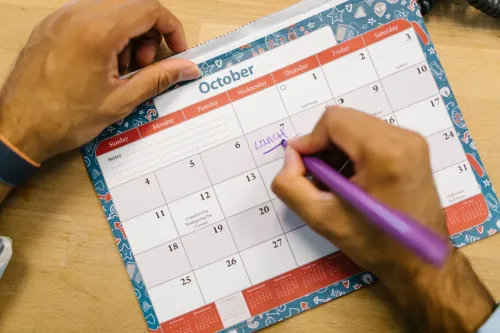
Days of the Week and Months in Tagalog
The days of the week and months in Tagalog are Spanish loanwords. Learn all 7 days and 12 months with pronunciation, plus how to say dates and 'every Monday.'