rupok
rupók with stress marks
fragility; structural weakness
Usage Note
Rupok describes the structural weakness or decay of materials like old wood or fabric that break easily. In modern slang, it is widely used metaphorically to describe a person who is emotionally vulnerable or easily swayed by romantic feelings.
Examples
" Halata ang rupok ng tulay. "
Natural Translation
The bridge's weakness is obvious.
Literal Translation
Obvious the fragility of bridge.
" Ang rupok ng lumang upuan. "
Natural Translation
The old chair is very fragile.
Literal Translation
The fragility of old seat.
" Dahil sa rupok ng kanyang loob, madali siyang naniwala sa mga matatamis na salita ng manloloko. "
Natural Translation
Because of the fragility of his heart, he easily believed the sweet words of the con artist.
Literal Translation
Because of fragility of his inside, easily he believed in sweet words of swindler.
Take Tagalog with you
The full course, a 12,500-word dictionary, and flashcards that make every word stick — free to start on iOS and Android.




Tagalog builds thousands of words from a few hundred roots.
How Tagalog words workDerived Words
Actor Focus Verbs
Related Words
Explore Tagalog by topic
Free guides on grammar, vocabulary, and culture to take you past single-word lookups.

Filipino Food: 12 Essential Dishes (With Tagalog Names)
Filipino food, from adobo to halo-halo: learn the Tagalog names, pronunciations, and ingredients behind 12 dishes you'll want to try on your first trip.

Is Tagalog Hard to Learn? An Honest Answer
Tagalog takes around 1,100 hours to reach professional proficiency. Here is what is easy, what is hard, and what to expect at 3, 6, and 12 months.
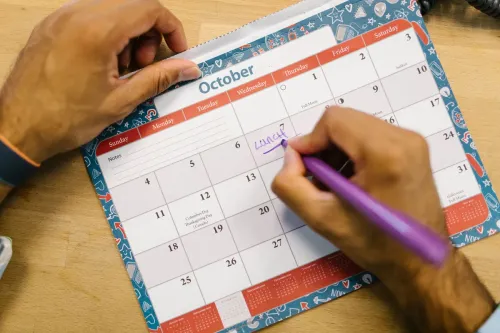
Days of the Week and Months in Tagalog
The days of the week and months in Tagalog are Spanish loanwords. Learn all 7 days and 12 months with pronunciation, plus how to say dates and 'every Monday.'

How Long Does It Take to Learn Tagalog?
Survival Tagalog takes ~3-4 weeks and comfortable conversation 6-12 months. FSI's 1,100 hours is the professional bar, not the talking-to-family bar.