
From root: saging
Conjugations
Past (Completed)
nagsaging
nag-SA-ging
ate bananas
Present (Incomplete)
nagsasaging
nag-sa-SA-ging
eating bananas
Future (Contemplated)
magsasaging
mag-sa-SA-ging
will eat bananas
Usage Note
Magsaging is used when specifically referring to the act of eating bananas, often as a light snack or a designated part of a meal. While grammatically correct, native speakers more commonly use the phrase 'kumain ng saging' in daily conversation.
Examples
" Gusto kong magsaging ngayon. "
Natural Translation
I want to eat bananas now.
Literal Translation
Want I to-eat-bananas now.
" Maraming bumibili para magsaging. "
Natural Translation
Many are buying to eat bananas.
Literal Translation
Many buying to to-eat-bananas.
" Sa halip na kumain ng matamis, nagpasya kaming magsaging na lang para mas malusog ang meryenda namin. "
Natural Translation
Instead of eating sweets, we decided to just eat bananas so our snack would be healthier.
Literal Translation
Instead of eat of sweets, decided we to-eat-bananas just for more healthy the snack our.
Take Tagalog with you
The full course, a 12,500-word dictionary, and flashcards that make every word stick — free to start on iOS and Android.




Tagalog builds thousands of words from a few hundred roots.
How Tagalog words workWord family
saging has 2 related forms built from the same root.
Related Words
Explore Tagalog by topic
Free guides on grammar, vocabulary, and culture to take you past single-word lookups.

How to Say "I Love You" in Tagalog: Phrases & Meaning
Learn how to say I love you in Tagalog. Mahal kita, Iniibig kita, and Filipino terms of endearment for partners, family, and friends — with cultural notes.
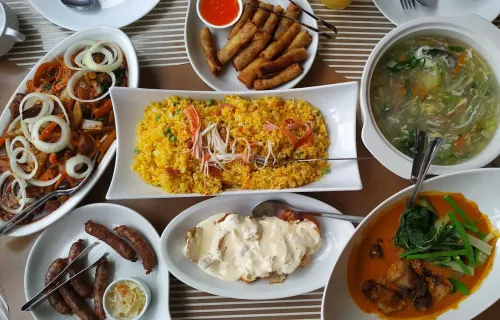
Filipino Food: 12 Essential Dishes (With Tagalog Names)
Filipino food, from adobo to halo-halo: learn the Tagalog names, pronunciations, and ingredients behind 12 dishes you'll want to try on your first trip.

How to Say Sorry in Tagalog: Patawad vs Pasensya
How to say sorry in Tagalog: patawad, pasensya na, and paumanhin compared on a simple severity-and-formality ladder so you pick the right word every time.

Filipino Family Words and Honorifics: Ate, Kuya & Tita
Filipino family words like ate, kuya, tita, tito, lolo, and lola go far beyond family — learn how Filipinos use them with strangers, plus mano po etiquette.