
From root: taas
Conjugations
Past (Completed)
ipinataas
i-pi-na-ta-AS
had something raised
Present (Incomplete)
ipinatataas
i-pi-na-ta-ta-AS
having something raised
Future (Contemplated)
ipatataas
i-pa-ta-ta-AS
will have something raised
Usage Note
Ipataas is used when requesting or ordering someone to elevate an object, such as a hand, a flag, or a price. It functions as a causative verb where the speaker directs an action to be performed on a specific object.
Examples
" Ipataas mo ang kamay mo. "
Natural Translation
Raise your hand.
Literal Translation
Have-raised you the hand your.
" Kailangan mong ipataas ang bandila ngayon. "
Natural Translation
You need to have the flag raised now.
Literal Translation
Need you have-raised the flag now.
" Bago mag-umpisa ang seremonya, ipinataas namin ang bandila habang inaawit ng mga bata ang pambansang awit. "
Natural Translation
Before the ceremony began, we had the flag raised while the children sang the national anthem.
Literal Translation
Before begin the ceremony, had-raised we the flag while being-sung by-the children the national anthem.
Take Tagalog with you
The full course, a 12,500-word dictionary, and flashcards that make every word stick — free to start on iOS and Android.




Tagalog builds thousands of words from a few hundred roots.
How Tagalog words workWord family
taas has 10 related forms built from the same root.
Related Words
Explore Tagalog by topic
Free guides on grammar, vocabulary, and culture to take you past single-word lookups.
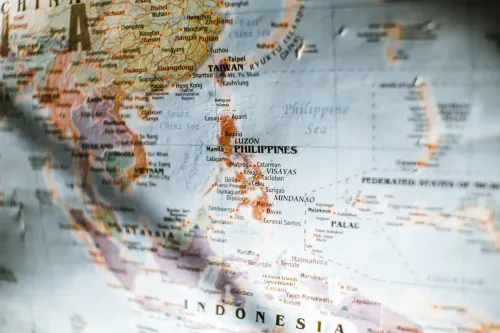
Philippines Geography for Learners: Islands & Language
Philippines geography for Tagalog learners: 7,641 islands, three island groups, and the Southern Luzon heartland where the Tagalog language was born.

Magkano: How to Ask "How Much" in Tagalog
Magkano means how much in Tagalog. Learn to ask a price, tell it apart from ilan and gaano, sound polite with po, and haggle at the palengke.
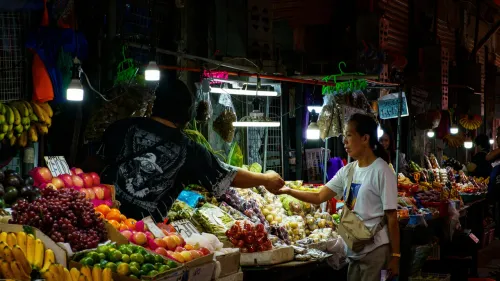
Tagalog Numbers 1-100: Counting, Time & Money Explained
Learn Tagalog numbers 1-100 and beyond. Master both native and Spanish-derived counting systems, plus telling time, reading prices, and ordinals.
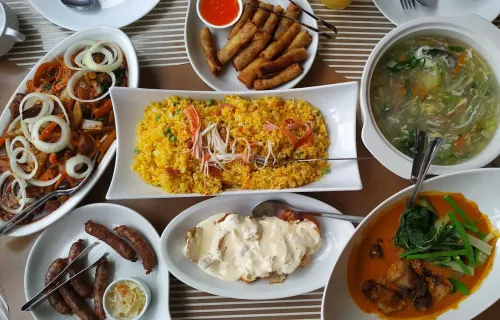
Filipino Food: 12 Essential Dishes (With Tagalog Names)
Filipino food, from adobo to halo-halo: learn the Tagalog names, pronunciations, and ingredients behind 12 dishes you'll want to try on your first trip.