magtingkayad
magtingkayád with stress marks
to tiptoe
From root: tingkayad
Conjugations
Past (Completed)
nagtingkayad
nag-ting-ka-YAD
tiptoed
Present (Incomplete)
nagtitingkayad
nag-ti-ting-ka-YAD
is tiptoeing
Future (Contemplated)
magtitingkayad
mag-ti-ting-ka-YAD
will tiptoe
Usage Note
Magtingkayad is the actor-focus form of tingkayad, used when someone walks or stands on the tips of their toes — typically to move quietly or to see and reach over something. It is common in domestic contexts, such as moving through the house without waking sleeping family members.
Examples
" Magtingkayad ka para abutin iyon. "
Natural Translation
Tiptoe to reach that.
Literal Translation
Tiptoe you to reach that.
" Kailangan mong magtingkayad para maabot ang mataas na estante. "
Natural Translation
You need to tiptoe to reach the high shelf.
Literal Translation
Need you to-tiptoe for to-reach the high shelf.
" Tahimik na nagtingkayad ang ina papasok sa kwarto upang hindi magising ang natutulog niyang sanggol. "
Natural Translation
The mother quietly tiptoed into the room so as not to wake her sleeping baby.
Literal Translation
Quietly tiptoed the mother entering to room so-that not wake the sleeping her baby.
Take Tagalog with you
The full course, a 12,500-word dictionary, and flashcards that make every word stick — free to start on iOS and Android.




Tagalog builds thousands of words from a few hundred roots.
How Tagalog words workRelated Words
Explore Tagalog by topic
Free guides on grammar, vocabulary, and culture to take you past single-word lookups.
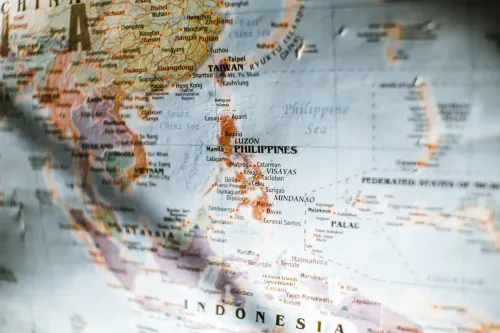
Philippines Geography for Learners: Islands & Language
Philippines geography for Tagalog learners: 7,641 islands, three island groups, and the Southern Luzon heartland where the Tagalog language was born.

Mano Po and Filipino Etiquette: A Visitor's Guide
Mano po presses an elder's hand to your forehead as a blessing. Learn who to mano, how to lip-point, and the etiquette that wins over a Filipino family.

Tagalog Slang Guide: 20 Words You'll Hear on TikTok
Tagalog slang explained: lodi, petmalu, werpa, astig, chika and more. Decode Filipino TikTok comments, group chats, and pop culture with this practical guide.

Seasons in the Philippines: A Tagalog Guide
The Philippines has two seasons, not four. Learn tag-araw, tag-ulan, and taglamig, the generative tag- prefix, and the weather vocabulary to match.