Usage Note
Ube is a vibrant purple yam native to the Philippines and one of the most iconic Filipino flavors. It is used in a wide range of desserts — halaya (ube jam), ice cream, pandesal, and cakes. Ube has gained international popularity as a distinctive Filipino ingredient, often celebrated for both its striking color and sweet, slightly nutty flavor.
Examples
" Gusto ko ng ube ice cream. "
Natural Translation
I want ube ice cream.
Literal Translation
Want I of ube ice cream.
" Paborito ko ang ube halaya lalo na kapag malamig. "
Natural Translation
Ube halaya is my favorite, especially when it's cold.
Literal Translation
Favorite my the ube halaya especially when cold.
" Tuwing may handaan sa amin, laging may ube halaya na niluluto mismo ng aking lola. "
Natural Translation
Whenever there's a celebration at our place, there's always ube jam that my grandmother cooks herself.
Literal Translation
Every there-is feast at us, always there-is ube jam that cooking itself by my grandmother.
Take Tagalog with you
The full course, a 12,500-word dictionary, and flashcards that make every word stick — free to start on iOS and Android.




Tagalog builds thousands of words from a few hundred roots.
How Tagalog words workRelated Words
Explore Tagalog by topic
Free guides on grammar, vocabulary, and culture to take you past single-word lookups.
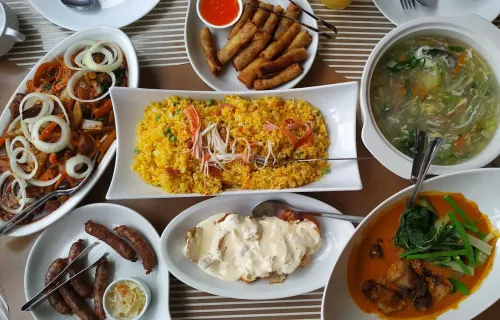
Filipino Food: 12 Essential Dishes (With Tagalog Names)
Filipino food, from adobo to halo-halo: learn the Tagalog names, pronunciations, and ingredients behind 12 dishes you'll want to try on your first trip.

Spaced Repetition for Tagalog: How Flashcards Make Words Stick
Cramming Tagalog vocabulary fails. See how spaced repetition — the science behind smart flashcards — makes words stick for the long term.

Tagalog Pronouns Explained: Complete Chart with Examples
Every Tagalog pronoun explained with clear charts: ang/ng/sa forms, tayo vs kami, ikaw vs ka, politeness markers, and the mistakes beginners make.

Magkano: How to Ask "How Much" in Tagalog
Magkano means how much in Tagalog. Learn to ask a price, tell it apart from ilan and gaano, sound polite with po, and haggle at the palengke.