Usage Note
Heopisika is borrowed from Spanish 'geofísica' and refers to the scientific study of the physical properties and processes of the earth, including seismology, volcanology, and geomagnetism. It is particularly relevant in the Philippines given frequent seismic activity, and is used almost exclusively in academic and scientific contexts.
Examples
" Mahirap ang heopisika. "
Natural Translation
Geophysics is difficult.
Literal Translation
Difficult the geophysics.
" Ang heopisika ay tumutulong sa pag-unawa ng mga likas na sakuna. "
Natural Translation
Geophysics helps in understanding natural disasters.
Literal Translation
The geophysics is-helping in understanding-of the natural disasters.
" Dahil madalas tamaan ng lindol ang bansa, mahalaga ang heopisika upang maunawaan ng mga siyentista ang galaw ng lupa sa ilalim natin. "
Natural Translation
Because the country is often struck by earthquakes, geophysics is important so scientists can understand the movement of the ground beneath us.
Literal Translation
Because often struck by earthquake the country, important the geophysics so-that understood by the scientists the movement of-the ground in under us.
Take Tagalog with you
The full course, a 12,500-word dictionary, and flashcards that make every word stick — free to start on iOS and Android.




Tagalog builds thousands of words from a few hundred roots.
How Tagalog words workRelated Words
Explore Tagalog by topic
Free guides on grammar, vocabulary, and culture to take you past single-word lookups.
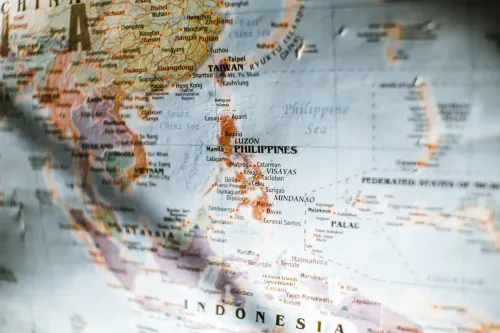
Philippines Geography for Learners: Islands & Language
Philippines geography for Tagalog learners: 7,641 islands, three island groups, and the Southern Luzon heartland where the Tagalog language was born.
Tagalog Numbers 1-100: Counting, Time & Money Explained
Learn Tagalog numbers 1-100 and beyond. Master both native and Spanish-derived counting systems, plus telling time, reading prices, and ordinals.
Days of the Week and Months in Tagalog
The days of the week and months in Tagalog are Spanish loanwords. Learn all 7 days and 12 months with pronunciation, plus how to say dates and 'every Monday.'
Philippine Christmas Traditions: World's Longest Holiday
Philippine Christmas traditions run four months — from Ber-month carols to Simbang Gabi dawn masses, Noche Buena feasts, and parol lanterns lighting every street.