mahirati
mahiratî with stress marks
to grow accustomed
From root: hirati
Conjugations
Past (Completed)
nahirati
na-hi-ra-TI
grew accustomed
Present (Incomplete)
nahihirati
na-hi-hi-ra-TI
is growing accustomed
Future (Contemplated)
mahihirati
ma-hi-hi-ra-TI
will grow accustomed
Usage Note
Mahirati is the *ma-*prefixed actor-focus form of hirati, describing becoming deeply habituated to something through long, repeated experience. The verb is stative and intransitive, most commonly encountered as the past form nahirati.
Examples
" Mabilis na mahirati ang bata rito. "
Natural Translation
The child grows accustomed here quickly.
Literal Translation
Quickly to-grow-accustomed the child here.
" Madaling mahirati ang bata sa magandang buhay rito. "
Natural Translation
It is easy for a child to grow accustomed to the beautiful life here.
Literal Translation
Easy to grow accustomed the child to beautiful life here.
" Matapos ang ilang buwan sa ibang bansa, nahirati na siya sa malamig na panahon kahit nahirapan siya noong una. "
Natural Translation
After a few months abroad, she grew accustomed to the cold weather even though she struggled at first.
Literal Translation
After the several months in other country, grew-accustomed already she to cold weather even-though struggled she during first.
Take Tagalog with you
The full course, a 12,500-word dictionary, and flashcards that make every word stick — free to start on iOS and Android.




Tagalog builds thousands of words from a few hundred roots.
How Tagalog words workRelated Words
Explore Tagalog by topic
Free guides on grammar, vocabulary, and culture to take you past single-word lookups.

Tagalog Numbers 1-100: Counting, Time & Money Explained
Learn Tagalog numbers 1-100 and beyond. Master both native and Spanish-derived counting systems, plus telling time, reading prices, and ordinals.

Filipino Family Words and Honorifics: Ate, Kuya & Tita
Filipino family words like ate, kuya, tita, tito, lolo, and lola go far beyond family — learn how Filipinos use them with strangers, plus mano po etiquette.

Tagalog Word Order: Sentence Structure Made Simple
Why Tagalog puts the verb first, and how ang, ng, and sa markers work. A clear guide to VSO word order, forming questions, and negation.
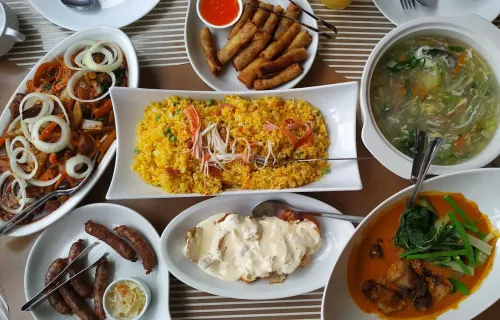
Filipino Food: 12 Essential Dishes (With Tagalog Names)
Filipino food, from adobo to halo-halo: learn the Tagalog names, pronunciations, and ingredients behind 12 dishes you'll want to try on your first trip.