
From root: karne
Conjugations
Past (Completed)
nagkarne
nag-KAR-ne
used or ate meat
Present (Incomplete)
nagkakarne
nag-ka-KAR-ne
using or eating meat
Future (Contemplated)
magkakarne
mag-ka-KAR-ne
will use or eat meat
Usage Note
Magkarne is used to describe the act of eating meat or incorporating meat into a dish, often appearing in discussions about dietary habits or religious fasting practices where meat consumption is a specific focus.
Examples
" Hindi ako magkakarne ngayon. "
Natural Translation
I won't eat meat today.
Literal Translation
Not I will-eat-meat now.
" Mahirap magkarne kung masakit ang ngipin. "
Natural Translation
It is hard to eat meat if your tooth hurts.
Literal Translation
Hard eat-meat if painful the tooth.
" Tuwing Biyernes ng Kuwaresma, iniiwasan naming magkarne bilang bahagi ng aming relihiyosong pangako. "
Natural Translation
Every Friday during Lent, we avoid eating meat as part of our religious vow.
Literal Translation
Every Friday of Lent, avoid we to-eat-meat as part of our religious promise.
Take Tagalog with you
The full course, a 12,500-word dictionary, and flashcards that make every word stick — free to start on iOS and Android.




Tagalog builds thousands of words from a few hundred roots.
How Tagalog words workWord family
karne has 5 related forms built from the same root.
Related Words
Explore Tagalog by topic
Free guides on grammar, vocabulary, and culture to take you past single-word lookups.

Tagalog Numbers 1-100: Counting, Time & Money Explained
Learn Tagalog numbers 1-100 and beyond. Master both native and Spanish-derived counting systems, plus telling time, reading prices, and ordinals.
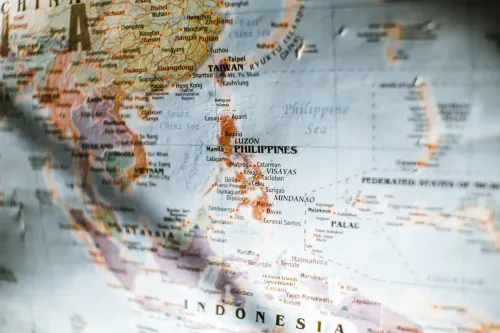
Philippines Geography for Learners: Islands & Language
Philippines geography for Tagalog learners: 7,641 islands, three island groups, and the Southern Luzon heartland where the Tagalog language was born.

Na vs -ng in Tagalog: The Linker Rule Made Simple
When do you use na vs -ng in Tagalog? One simple rule, with clear examples, memory tips, and common mistakes explained for English-speaking beginners.
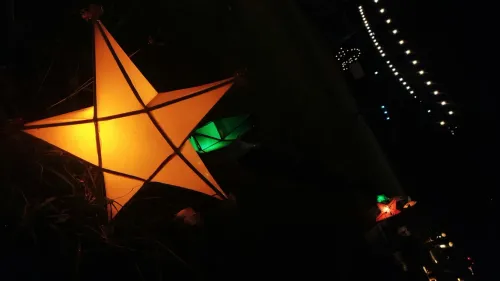
Philippine Christmas Traditions: World's Longest Holiday
Philippine Christmas traditions run four months — from Ber-month carols to Simbang Gabi dawn masses, Noche Buena feasts, and parol lanterns lighting every street.