Usage Note
Komemorasyon is a Spanish loanword (from conmemoración) used in formal and ceremonial contexts — national holidays, death anniversaries of heroes, and religious observances. Komemorasyon events are common in Philippine schools and government offices, especially for Rizal Day and Independence Day.
Examples
" May komemorasyon sa paaralan bukas. "
Natural Translation
There is a commemoration at school tomorrow.
Literal Translation
Has commemoration in-the school tomorrow.
" Idinaos ang komemorasyon ng kamatayan ni Rizal sa Luneta. "
Natural Translation
The commemoration of Rizal's death was held at Luneta.
Literal Translation
Held the commemoration of-the death of Rizal at Luneta.
" Tuwing Araw ng Kalayaan, nagdaraos ng komemorasyon ang pamahalaan upang gunitain ang sakripisyo ng mga bayani ng bansa. "
Natural Translation
Every Independence Day, the government holds a commemoration to remember the sacrifice of the country's heroes.
Literal Translation
Every Day of Freedom, holds of commemoration the government so-that remember the sacrifice of-the heroes of-the country.
Take Tagalog with you
The full course, a 12,500-word dictionary, and flashcards that make every word stick — free to start on iOS and Android.




Tagalog builds thousands of words from a few hundred roots.
How Tagalog words workRelated Words
Explore Tagalog by topic
Free guides on grammar, vocabulary, and culture to take you past single-word lookups.
How to Say Sorry in Tagalog: Patawad vs Pasensya
How to say sorry in Tagalog: patawad, pasensya na, and paumanhin compared on a simple severity-and-formality ladder so you pick the right word every time.
Days of the Week and Months in Tagalog
The days of the week and months in Tagalog are Spanish loanwords. Learn all 7 days and 12 months with pronunciation, plus how to say dates and 'every Monday.'

Ang, Ng, Sa: The 3 Tagalog Case Markers Explained
Ang, ng, sa are the three Tagalog case markers every noun takes. Learn what each does, the personal forms si/ni/kay, plurals with mga, and clear examples.
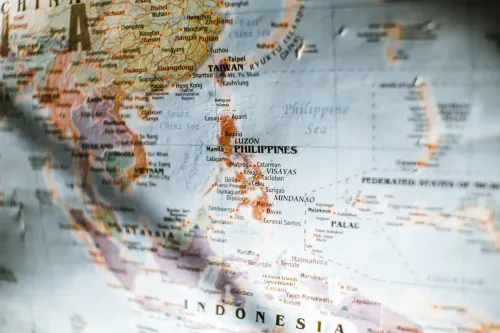
Philippines Geography for Learners: Islands & Language
Philippines geography for Tagalog learners: 7,641 islands, three island groups, and the Southern Luzon heartland where the Tagalog language was born.