ma-
indicates possessor of a quality
Also means
Ma- can also mark an involuntary or accidental action when used as a verb prefix, as in 'mahulog' (to accidentally fall).
Usage Note
Ma- is an adjective-forming prefix that attaches to a root word to mean 'having much of' or 'characterized by' that quality — producing forms like maganda, matalino, and masaya. It is one of the most productive affixes in Tagalog and essential for building descriptive vocabulary.
Examples
" Maganda ang bulaklak. "
Natural Translation
The flower is beautiful.
Literal Translation
Beautiful the flower.
" Maganda ang bata. "
Natural Translation
The child is beautiful.
Literal Translation
Beautiful the child.
" Mas masarap ang ulam kapag matagal mong pinakuluan ang sabaw bago dagdagan ng iba pang sangkap. "
Natural Translation
The dish tastes better when you boil the broth for a long time before adding the other ingredients.
Literal Translation
More delicious the dish when long you boiled the broth before add of other still ingredient.
Take Tagalog with you
The full course, a 12,500-word dictionary, and flashcards that make every word stick — free to start on iOS and Android.




Tagalog builds thousands of words from a few hundred roots.
How Tagalog words workRelated Words
Explore Tagalog by topic
Free guides on grammar, vocabulary, and culture to take you past single-word lookups.

Tagalog Root Words: Learn a Few Hundred, Understand Thousands
Tagalog root words unlock vocabulary fast: learn a few hundred and recognize thousands. Real word families, examples, and a practical study strategy.

Seasons in the Philippines: A Tagalog Guide
The Philippines has two seasons, not four. Learn tag-araw, tag-ulan, and taglamig, the generative tag- prefix, and the weather vocabulary to match.
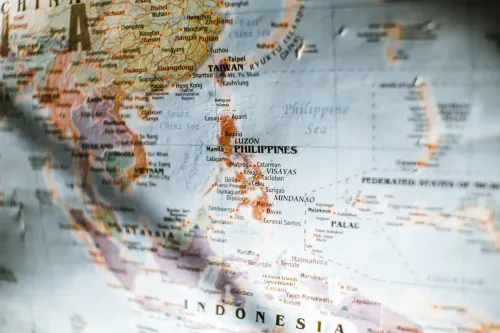
Philippines Geography for Learners: Islands & Language
Philippines geography for Tagalog learners: 7,641 islands, three island groups, and the Southern Luzon heartland where the Tagalog language was born.

Mano Po and Filipino Etiquette: A Visitor's Guide
Mano po presses an elder's hand to your forehead as a blessing. Learn who to mano, how to lip-point, and the etiquette that wins over a Filipino family.