nagsipag-
plurality of action marker
Usage Note
Nagsipag- uses the infix -si- to mark plurality of actors performing an action in the completed aspect — nagsipag-aral means they all studied. It is primarily literary or formal; conversational Tagalog typically relies on context rather than this prefix to signal plural actors.
Examples
" Nagsipag-uwian ang mga tao. "
Natural Translation
The people all went home.
Literal Translation
Plural-went-home the plural person.
" Nagsipag-aral ang mga bata. "
Natural Translation
The children all studied.
Literal Translation
Plural-studied the plural children.
" Pagkatapos ng klase, nagsipag-uwian ang mga mag-aaral upang maghanda sa pagsusulit kinabukasan. "
Natural Translation
After class, the students all went home to prepare for the exam the next day.
Literal Translation
After of class, plural-went-home the plural student in-order to-prepare for exam next-day.
Take Tagalog with you
The full course, a 12,500-word dictionary, and flashcards that make every word stick — free to start on iOS and Android.




Tagalog builds thousands of words from a few hundred roots.
How Tagalog words workRelated Words
Explore Tagalog by topic
Free guides on grammar, vocabulary, and culture to take you past single-word lookups.

Mano Po and Filipino Etiquette: A Visitor's Guide
Mano po presses an elder's hand to your forehead as a blessing. Learn who to mano, how to lip-point, and the etiquette that wins over a Filipino family.

Ang, Ng, Sa: The 3 Tagalog Case Markers Explained
Ang, ng, sa are the three Tagalog case markers every noun takes. Learn what each does, the personal forms si/ni/kay, plurals with mga, and clear examples.

Tagalog Greetings: How to Say Hello, Goodbye & Po/Opo
Master Tagalog greetings with pronunciation: kumusta, magandang umaga, po and opo polite forms, time-of-day phrases, and the mano po tradition.
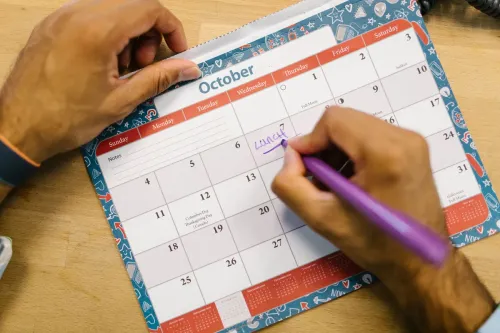
Days of the Week and Months in Tagalog
The days of the week and months in Tagalog are Spanish loanwords. Learn all 7 days and 12 months with pronunciation, plus how to say dates and 'every Monday.'