napa-
indicates accidental or unintentional action
Usage Note
Napa- is a verb prefix attached to roots to form completed-aspect verbs expressing involuntary or unintended actions — the actor could not help doing it. It appears in common words like napatawa and napangiti and is very frequent in casual conversation.
Examples
" Napatayo ako sa gulat. "
Natural Translation
I suddenly stood up in surprise.
Literal Translation
Suddenly-stood I in surprise.
" Napalingon ako sa ingay. "
Natural Translation
I suddenly turned to look at the noise.
Literal Translation
Suddenly-turned-to-look I at noise.
" Napatawa kaming lahat nang biglang madapa ang aso habang naghahabol ng pusa sa bakuran. "
Natural Translation
We all burst out laughing when the dog suddenly tripped while chasing a cat in the yard.
Literal Translation
Burst-laughing we all when suddenly tripped the dog while chasing of cat in yard.
Take Tagalog with you
The full course, a 12,500-word dictionary, and flashcards that make every word stick — free to start on iOS and Android.




Tagalog builds thousands of words from a few hundred roots.
How Tagalog words workRelated Words
Explore Tagalog by topic
Free guides on grammar, vocabulary, and culture to take you past single-word lookups.

May vs Mayroon vs Meron: Have & There Is
May vs mayroon in Tagalog finally made simple: one rule decides which to use, plus how meron and wala fit the same have and there-is family.

How to Say Sorry in Tagalog: Patawad vs Pasensya
How to say sorry in Tagalog: patawad, pasensya na, and paumanhin compared on a simple severity-and-formality ladder so you pick the right word every time.
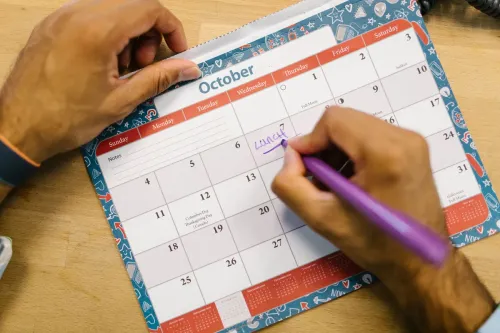
Days of the Week and Months in Tagalog
The days of the week and months in Tagalog are Spanish loanwords. Learn all 7 days and 12 months with pronunciation, plus how to say dates and 'every Monday.'

Tagalog vs Filipino: What's the Difference & Which to Learn
Tagalog and Filipino aren't the same language — but they overlap almost completely. Here's the real difference and which one you should actually learn.