napaka-
intensive degree marker (very/too)
Usage Note
Napaka- is a prefix attached to adjective roots to express a high or excessive degree, equivalent to English 'very' or 'extremely'. It is always followed by the root without a linker and is widely used across all registers.
Examples
" Napakainit ngayon. "
Natural Translation
It's very hot today.
Literal Translation
Very-hot now.
" Napakaganda ng tanawin. "
Natural Translation
The scenery is extremely beautiful.
Literal Translation
Extremely-beautiful of scenery.
" Napakahirap talaga ng pagsusulit kahapon kaya halos lahat kami ay nahirapang sumagot. "
Natural Translation
Yesterday's exam was really extremely difficult, so almost all of us struggled to answer.
Literal Translation
Very-hard really of exam yesterday so almost all we were hard-pressed to-answer.
Take Tagalog with you
The full course, a 12,500-word dictionary, and flashcards that make every word stick — free to start on iOS and Android.




Tagalog builds thousands of words from a few hundred roots.
How Tagalog words workRelated Words
Explore Tagalog by topic
Free guides on grammar, vocabulary, and culture to take you past single-word lookups.

Tagalog Verb Conjugation: Aspects Made Simple
Tagalog verb conjugation uses aspects, not tenses. Learn the three aspects with -um- and mag- verbs, one reduplication rule, and clear example tables.
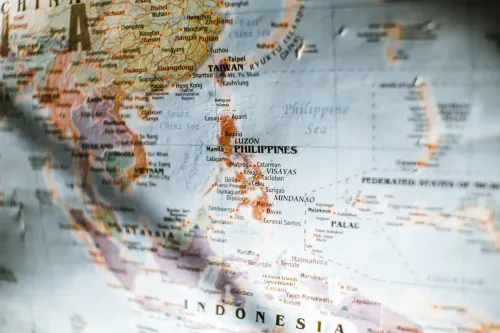
Philippines Geography for Learners: Islands & Language
Philippines geography for Tagalog learners: 7,641 islands, three island groups, and the Southern Luzon heartland where the Tagalog language was born.

Filipino Family Words and Honorifics: Ate, Kuya & Tita
Filipino family words like ate, kuya, tita, tito, lolo, and lola go far beyond family — learn how Filipinos use them with strangers, plus mano po etiquette.

Tagalog vs Filipino: What's the Difference & Which to Learn
Tagalog and Filipino aren't the same language — but they overlap almost completely. Here's the real difference and which one you should actually learn.