From root: sama
Conjugations
Past (Completed)
sumama
su-MA-ma
went with
Present (Incomplete)
sumasama
su-ma-SA-ma
going with
Future (Contemplated)
sasama
sa-SA-ma
will go with
Usage Note
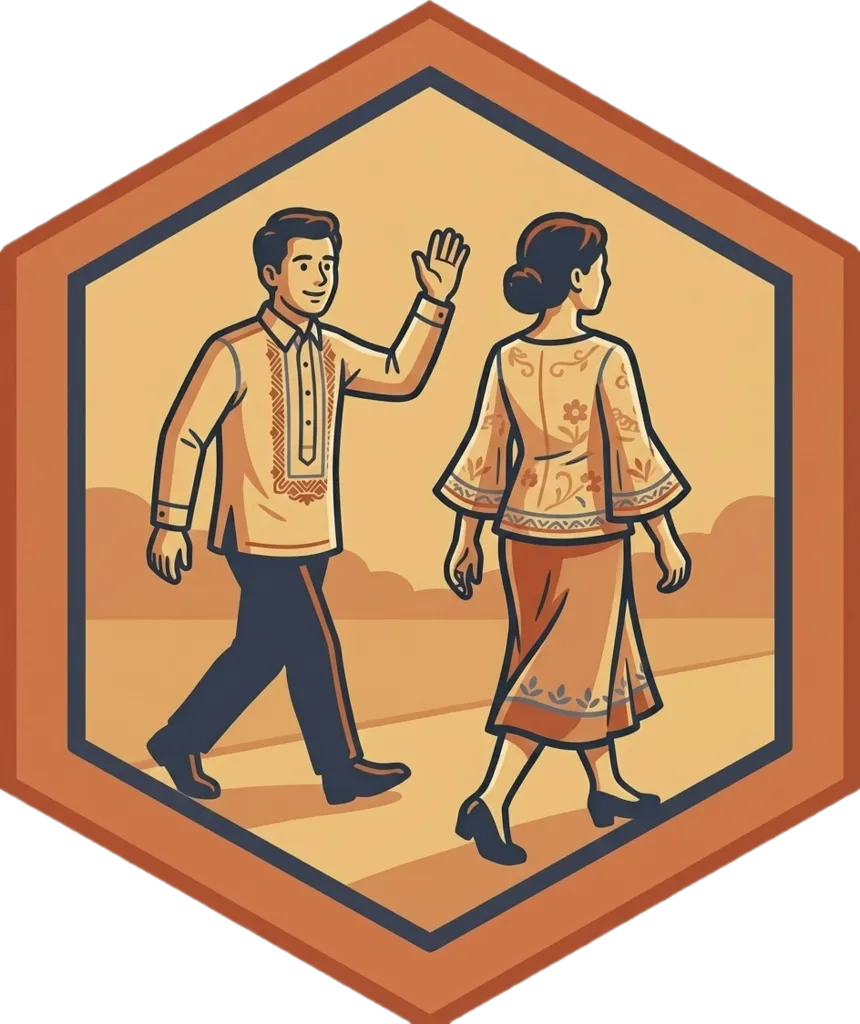
Sumama is used when joining someone in an activity or accompanying them to a destination, often implying a sense of companionship or following a leader. It is frequently heard in social invitations like 'Gusto mong sumama?' to foster a sense of togetherness.
Examples
" Gusto kong sumama sa iyo. "
Natural Translation
I want to go with you.
Literal Translation
Want I go-with to you.
" Gusto kong sumama sa iyo. "
Natural Translation
I want to go with you.
Literal Translation
Want I to go with you.
" Kung wala kang gagawin bukas, sumama ka na lang sa amin sa probinsya para makapagpahinga ka nang kaunti. "
Natural Translation
If you have nothing to do tomorrow, just come with us to the province so you can rest a little.
Literal Translation
If none you will-do tomorrow, go-with you just to us to province so can-rest you a little.
Take Tagalog with you
The full course, a 12,500-word dictionary, and flashcards that make every word stick — free to start on iOS and Android.




Tagalog builds thousands of words from a few hundred roots.
How Tagalog words workWord family
sama has 11 related forms built from the same root.
Related Words
Explore Tagalog by topic
Free guides on grammar, vocabulary, and culture to take you past single-word lookups.
Philippines Geography for Learners: Islands & Language
Philippines geography for Tagalog learners: 7,641 islands, three island groups, and the Southern Luzon heartland where the Tagalog language was born.
Days of the Week and Months in Tagalog
The days of the week and months in Tagalog are Spanish loanwords. Learn all 7 days and 12 months with pronunciation, plus how to say dates and 'every Monday.'
Filipino Food: 12 Essential Dishes (With Tagalog Names)
Filipino food, from adobo to halo-halo: learn the Tagalog names, pronunciations, and ingredients behind 12 dishes you'll want to try on your first trip.
Philippine Christmas Traditions: World's Longest Holiday
Philippine Christmas traditions run four months — from Ber-month carols to Simbang Gabi dawn masses, Noche Buena feasts, and parol lanterns lighting every street.