sota
sóta with stress marks
groom; person in charge of horses
Also means
In card games, 'sota' refers to the jack or knave card in the Spanish deck.
Usage Note
Sota is a Spanish loanword that originally referred to a stableman or horse groom during the colonial period. Today it is rarely used in its equestrian sense but survives as the name of the jack card in traditional Filipino games using the Spanish deck.
Examples
" Inalagaan ng sota ang kabayo. "
Natural Translation
The groom took care of the horse.
Literal Translation
Took-care of groom the horse.
" Tinawag ng sota ang mga kabayo. "
Natural Translation
The groom called the horses.
Literal Translation
Called of groom the horses.
" Noong panahon ng mga Kastila, ang sota ang siyang nag-aalaga at naghahanda ng mga kabayo ng mga maharlika. "
Natural Translation
During the Spanish era, it was the groom who took care of and prepared the horses of the nobility.
Literal Translation
During time of the Spaniards, the groom the who taking-care and preparing of the horses of the nobles.
Take Tagalog with you
The full course, a 12,500-word dictionary, and flashcards that make every word stick — free to start on iOS and Android.




Tagalog builds thousands of words from a few hundred roots.
How Tagalog words workRelated Words
Explore Tagalog by topic
Free guides on grammar, vocabulary, and culture to take you past single-word lookups.
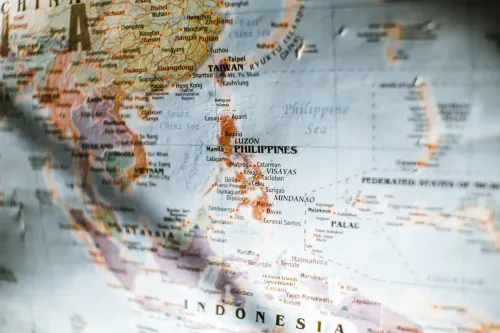
Philippines Geography for Learners: Islands & Language
Philippines geography for Tagalog learners: 7,641 islands, three island groups, and the Southern Luzon heartland where the Tagalog language was born.

Philippine Christmas Traditions: World's Longest Holiday
Philippine Christmas traditions run four months — from Ber-month carols to Simbang Gabi dawn masses, Noche Buena feasts, and parol lanterns lighting every street.
Tagalog Numbers 1-100: Counting, Time & Money Explained
Learn Tagalog numbers 1-100 and beyond. Master both native and Spanish-derived counting systems, plus telling time, reading prices, and ordinals.

Tagalog Word Order: Sentence Structure Made Simple
Why Tagalog puts the verb first, and how ang, ng, and sa markers work. A clear guide to VSO word order, forming questions, and negation.