talak
talák with stress marks
loud, incessant talk; to harangue
Usage Note
Talak conveys unstoppable, often irritating chatter or lecturing. 'Walang tigil ang talak niya' (his talking never stops) is a common expression of mild exasperation. The word is used affectionately between close friends but can be sharply critical when aimed at someone seen as overly domineering or a busybody.
Examples
" Ang ingay ng talak niya. "
Natural Translation
His/her harangue is so noisy.
Literal Translation
The noise of harangue his/her.
" Nakakabingi ang talak ng babae sa kanto. "
Natural Translation
The loud talk of the woman at the corner is deafening.
Literal Translation
Deafening the loud-talk of woman at corner.
" Walang tigil ang talak ng kapitbahay tuwing umaga, kaya halos hindi na kami makapagpahinga sa loob ng bahay. "
Natural Translation
The neighbor's incessant chatter never stops every morning, so we can hardly rest inside the house.
Literal Translation
No stop the harangue of neighbor every morning, so almost not anymore we can-rest in inside of house.
Take Tagalog with you
The full course, a 12,500-word dictionary, and flashcards that make every word stick — free to start on iOS and Android.




Tagalog builds thousands of words from a few hundred roots.
How Tagalog words workActor Focus Verbs
Related Words
Explore Tagalog by topic
Free guides on grammar, vocabulary, and culture to take you past single-word lookups.

Tagalog Root Words: Learn a Few Hundred, Understand Thousands
Tagalog root words unlock vocabulary fast: learn a few hundred and recognize thousands. Real word families, examples, and a practical study strategy.

Languages of the Philippines: Tagalog, Cebuano, and More
Languages of the Philippines: one national language (Filipino) plus 180+ regional languages. Here's who speaks what, where, and why it matters to you.
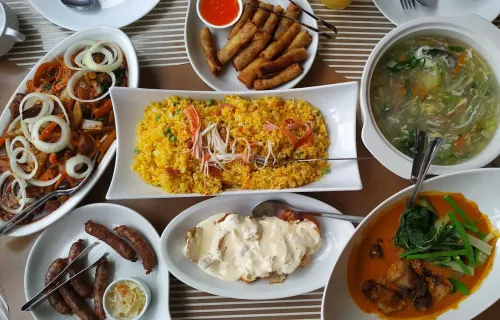
Filipino Food: 12 Essential Dishes (With Tagalog Names)
Filipino food, from adobo to halo-halo: learn the Tagalog names, pronunciations, and ingredients behind 12 dishes you'll want to try on your first trip.
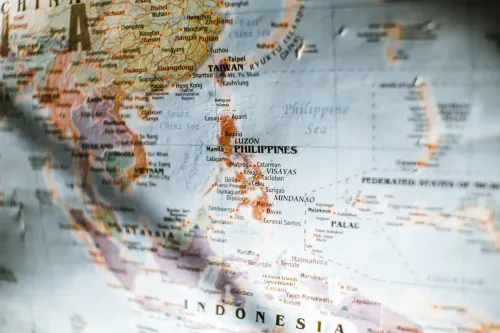
Philippines Geography for Learners: Islands & Language
Philippines geography for Tagalog learners: 7,641 islands, three island groups, and the Southern Luzon heartland where the Tagalog language was born.