tsampaka
tsampáka with stress marks
champaca flower
Usage Note
Tsampaka is derived ultimately from Sanskrit 'campaka' and refers to the Magnolia champaca, a fragrant flowering tree prized in Philippine gardens and used in garlands for religious offerings. Its sweet scent is associated with beauty, devotion, and feminine grace in Filipino poetry.
Examples
" Mabango ang tsampaka sa hardin. "
Natural Translation
The champaca in the garden is fragrant.
Literal Translation
Fragrant the champaca in-the garden.
" Mabango ang bulaklak ng tsampaka. "
Natural Translation
The flower of the champaca is fragrant.
Literal Translation
Fragrant the flower of champaca.
" Pinitas ng dalaga ang mga tsampaka upang gawing kuwintas na ihahandog sa altar ng simbahan. "
Natural Translation
The young woman picked the champaca flowers to make into a garland to be offered at the church altar.
Literal Translation
Was-picked by-the young-woman the champaca to make-into garland that-will-be-offered at altar of church.
Take Tagalog with you
The full course, a 12,500-word dictionary, and flashcards that make every word stick — free to start on iOS and Android.




Tagalog builds thousands of words from a few hundred roots.
How Tagalog words workRelated Words
Explore Tagalog by topic
Free guides on grammar, vocabulary, and culture to take you past single-word lookups.
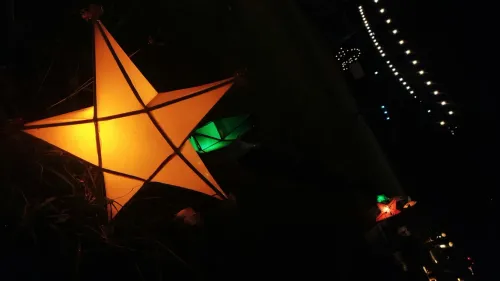
Philippine Christmas Traditions: World's Longest Holiday
Philippine Christmas traditions run four months — from Ber-month carols to Simbang Gabi dawn masses, Noche Buena feasts, and parol lanterns lighting every street.
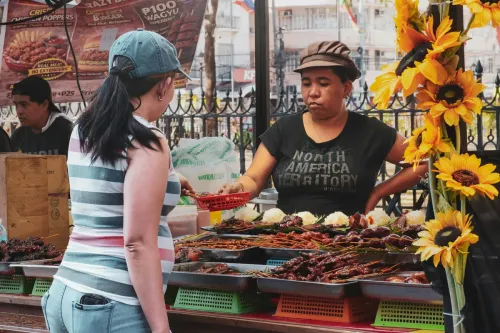
May vs Mayroon vs Meron: Have & There Is
May vs mayroon in Tagalog finally made simple: one rule decides which to use, plus how meron and wala fit the same have and there-is family.

Days of the Week and Months in Tagalog
The days of the week and months in Tagalog are Spanish loanwords. Learn all 7 days and 12 months with pronunciation, plus how to say dates and 'every Monday.'

Filipino Family Words and Honorifics: Ate, Kuya & Tita
Filipino family words like ate, kuya, tita, tito, lolo, and lola go far beyond family — learn how Filipinos use them with strangers, plus mano po etiquette.